This weekend, my wife Jen and I went to Madison to watch the Wisconsin Badger hockey team take on the Minnesota Golden Gophers. This being college hockey- I saw no reason to pony up the $15 extra bucks worth of “convenience” charges they hit you with if you want to buy your tickets in advance on the U-Wisconsin website.
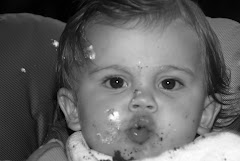
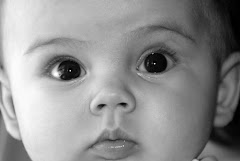
Since it was only about 18 degrees last night, I dropped Jen and my four month old son, Leo, off in front of the Kohl Center about 10 minutes prior to the game, and told them to wait inside while I parked. It took me a half-hour to find a spot, as the entire neighborhood was chock full of people and cars. Jen called on the cell to inform me that the game was sold out, but when it comes to getting tickets, I’m an eternal optimist, so I told her not to worry about it, I’d rustle up tickets from a scalper. Meanwhile, the Kohl Center is a 17,000 plus seat arena, so I was still stunned to think that this game could be a sell-out.
I spent the entire first period outside in the cold trying in vain to find tickets. One student from Minnesota gave me one for free, but I couldn’t seem to find a second. Eventually I went inside and Jen tried to encourage me to go alone, but I would have nothing of it- it was the whole family or no one at all. I asked the ticket collectors if they could rustle up another seat for us.
“Did you try the box office?” they asked.
I had to admit I hadn’t, but there were signs on the doors of the arena announcing a sell out. I stopped by the box office, and, again, on each window there was a sign which said, “Tonight’s Game is SOLD OUT!” I almost didn’t walk up to ask, but decided to ask anyways.
“Do you have tickets?” I asked.
“Sure, how many do you need?” the young woman replied.
“You have tickets?” I asked “Why do all the signs say “SOLD OUT?”
“We don’t have seats together, but I have eight or ten single seats.”
So I bought one, and we all headed to the customer relations desk in the arena. I didn’t want us to have to sit in different sections or stand for the whole game, so I pleaded our case to a nice young guy as little Leo- all bulked up in his little snow suit- did his part by smiling and winning over the hearts of everyone in earshot. The young guy found a nice V.I.P. handicapped area for us to sit in that was right above part of the student section and next to the U-Wisconsin band.
The Wisconsin students really no how to support their team- they stand, jump, dance, and gyrate on their feet for the entire game as the band whips everyone into a frenzy. The band- which is so massive it takes up an entire section- even plays in between periods- and the students have various tribal dances for each song they play. The students also have lots of interesting chants- including one that boldly asserts that the opposing goalie-Alex Kangas- is a fan of taking it in the arse. KANGAS LIKES HIS SOD-O-MEE SOD-O-MEE SOD-O-MEE!!
When Wisconsin tied the score at 2 with just under 7 minutes to play the place erupted into pandemonium and little Leo- who had been sleeping peacefully in his mothers sling contraption- was briefly jolted awake by the cacophony of horns, tubas, beating tribal drums and the screams of delight from the delirious fans. The game went into overtime, and the Badgers failed to convert several point blank chances to win it, and the game ended in a tie.
For some strange reason, college hockey doesn’t have the shootout like the pro’s does- and an overtime hockey game with no shootout in this day and age- is a little like a porno scene with no climax- just a bit pointless. With a few minutes left in the game the students started chanting “STAND UP OLD PEOPLE” over and over, louder and louder. I ignored them at first, as my first instinct was to think I’m not old, they’re not talking about me. But then as the rest of the crowd began to rise, and I looked down at my once again slumbering son, I realized- I am old, they are talking about me. So we stood up, and looked on in admiration at the kids in the student section, who were literally dancing in the aisles with every new tune pumped out by the band. And as I thought again about my little family, I realized that I am old, but I’m OK with it, life is good.
Showing posts with label travel story. Show all posts
Showing posts with label travel story. Show all posts
Sunday, January 27, 2008


Friday, January 25, 2008
American Men on the Loose in Transylvania
Male friendship during college and into your post-collegiate single guy hitting the bar scene years is a relatively simple concept. A guy in his “independent” years can just call up one of his mates and, on the spur of the moment and with nary a check of a calendar or blackberry, agree to meet up or even commit to a road trip. As you grow older and take on more responsibility- a better job, a wife, and/or kids being the likeliest suspects- the idea of friendship changes. You lose touch with some friends and spend less time with even your good friends as demands on your time bore in on you from all angles like a fleet of pac-men making their way around a game board. Often times, activities are built around couples’s nights out, or involve work related functions. Spouses are often leery of “guys’ night out” and its often not worth the trade off’s and bargaining most men needed to engage in to even secure quality time with one’s guy friends.
So it was with some degree of surprise and a great measure of delight when my friend Ian called me one day in February from his office in St. Louis and announced his intention to come visit me in Hungary.
“I was thinking about coming out next year,” he said.
My wife, Jennifer, and me had recently lived in Macedonia for two years, working at the American Embassy in Skopje, and half of our friends had claimed that they were going to visit us, but none of them actually did. When we received an assignment in Budapest, even more claimed they would come see us, and given the fact that Budapest is much more squarely ensconced in the realm of tourism possibilities for Americans, we wondered if any would actually turn up this time.
“Next year is too late,” I told him, why don’t you come this spring?”
Ian is married, has three children under the age of five, and has a job in the world of advertising which affords him both a lot of responsibility and stress. I almost felt bad putting him on the spot, but, to my surprise, the prospect of an escape from his busy job appealed to him.
“I could try to come next month,” he offered, and within a week his trip was booked.
In the weeks leading up to Ian’s visit, we spoke several times and tried to decide on some kind of itinerary. Each time he called, I sort of half expected him to bail out on the trip- I suppose I was still surprised that he was “allowed” to travel. Ian is fortunate to have a fabulous, and exceedingly understanding wife, Katie, who is not the sort of clingy spouse that men hate for their friends to marry, for fear they will never see their friend again. No Katie is nothing like that, but, still, she was going to let Ian, who only has a few weeks of vacation per year, to travel alone to Europe for nine days while she stayed at home with three young kids? It did seem too good to be true, but Ian was deadly serious about making the voyage, and he didn’t want the usual Rick Steve’s tour either.
“I was thinking we should go to Romania,” he suggested, about as casually as one might suggest going down to the local shopping center to buy a can of Pringles. I’d been to Romania ten years before and was intrigued by what I’d seen and experienced, but Ian had never been to most of the other more celebrated countries of the region- Austria, the Czech Republic, and Germany to name a few.
“Why Romania?” I asked.
“Why not? I’d kind of like to go some place real, a bit off the beaten track, and I feel like I could go to Prague or Vienna with Katie, but when else would I get the chance to see Romania and the Carpathian mountains?”
Ian and I tentatively agreed to spend a few days in Budapest and four or five days in Romania, but I thought that Ian was a bit ambitious in hoping to visit most of Transylvania and Budapest in a single week. I had never driven in Romania, but I had a feeling that the distances on the map were not indicative of how long it would actually take to cover ground in Transylvania.
After a busy weekend in Budapest, Ian and I set off for Romania on a cool but sunny Monday morning in March.
“I cannot believe that its Monday morning, and instead of being on my way to work in St. Louis, I’m here driving through Budapest on my way to Transylvania, I like it!” Ian exclaimed.
We felt an exhilarating sense of freedom and excitement to have five days with no work, and no responsibility. We had no hotel reservations, and only a vague idea of what we planned to see and do.
I remember wondering aloud, “ how often in life do you have a week like this? I mean it’s a shame that there is so much routine and so few adventures like this one is going to be!”
Our excitement though, was quickly dampened by the wretched stop and go traffic that made our escape from my home in a residential part of Buda, on the west bank of the Danube, to the outer fringes of the other side of Budapest a slow and maddening crawl. An hour into the trip, we were still in the Pest suburbs and my driving ankle was already sore from stopping so frequently. Surprisingly, suburban Budapest is just as plagued by soulless office parks, strip malls and big box retailers as any of the blandest suburbs in the States. We had heard that we could make it to Cluj-Napoca in western Transylvania in 4-5 hours, but as we creeped along the one lane road eastwards behind slow moving trucks and a variety of slow older cars and impatient, reckless faster moving cars weaving in and out, I just hoped we could make it to Cluj before sundown.
As we neared the Romanian border, each settlement seemed to be progressively more run down.
“I just can’t believe how these houses have no setback from the road!” Ian said. “You step outside your front door and your feet could get mowed over by oncoming traffic! Where are the kids supposed to play?”
It was a good question- the busy motorway seemed to blow right through the hearts of what had previously been sleepy villages. It was also a thought that I’m sure would not have occurred to Ian before he became a dad.
“It’s amazing how your perspective changes once you have kids,” Ian said, as we rolled on slowly towards the border area. “ I get so angry when cars come flying down our street when my kids are out playing, sometimes I scream at them, ‘slow down you dumb ass!’ but I don’t know if it does any good. If I lived here I think I’d go nuts!”
As we neared the border, we saw a few very haggard looking prostitutes working the side of the road.
“Can’t believe there out on a Monday afternoon, business must be good,” Ian said.
Two married American men in a Toyota with diplomatic plates slowing down to get a better look at roadside prostitutes near the Romania border on a Monday afternoon. Good times.
Romania had just joined the European Union (EU) less than three months before our visit (whereas the elite Brussels gang deemed Hungary worthy back in 2004) and it was still a matter of speculation whether hordes of Romanians would vote with their feet and move to more prosperous countries in the E.U. Some critics who feared allowing Romania and Bulgaria into the EU club feared that public benefits seeking Romas or gypsies would flood into wealthier countries and immediately go on the dole. We could see that Romania had many of the same major European chains lining its streets that one sees in Hungary and points westward, but there was no denying that not everyone was thriving in the post-EU Romania. The road from the border to Oradea was lined with an impossibly contrasting mixture of traffic- loads of old Dacia’s leftover from the communist era shared the road with both supped up Mercedes and BMW’s piloted by kamikaze suicide drivers and farmers with horse drawn carts. An American motorist can experience more brushes with death in a single hour on a two-lane road in Romania, or even Hungary for that matter, than in a lifetime of drag racing in the States.
The heavy commercial and private traffic indicated a certain level of prosperity- with gas prices averaging around the equivalent of $5 per gallon- but the signs of jaw dropping rural poverty where also plain for anyone to see. We would drive through a shabby looking village and then notice a cluster of shacks where Roma children would be playing amidst muck and filth. The Roma have long lived in segregated neighborhoods on the outskirts of villages all over Eastern Europe, but the depths of the poverty could not help but bring down our mood. Meanwhile, Ian and I were listening to podcasts on the car stereo, including several episodes of Cubscast. It was just a few weeks before the start of the baseball season, and yet it seemed absurdly incongruous to be listening to three men stressing over such mundane issues as who would be the Cubs fifth starter and whether the Cubs would resign Carlos Zambrano as we passed through villages where people seemed to be struggling just to survive. Life is definitely good when the struggles of your sports team are the most pressing item on your life’s agenda.
“I do find it comforting to listen to others who waste even more time stressing over the Cubs than I do,” Ian said.
The road leading into Oradea, the first major town we came across in Romania, was lined with the same kind of dilapidated, soul crushing Soviet era apartment blocks one sees all over the former Soviet Union and eastern block countries. Each one had its own horrifying characteristics, but the common threads were filthy exteriors, cheap looking construction, and boxy concrete balconies. After having lived in Macedonia and Hungary, the so called “commie cubes” didn’t faze me too much, but Ian’s mood suffered a bit.
“These things are brutal! I just cannot imagine how depressing it would be to live in one of these boxes.”
The center of Oradea looked more promising, but the streets were clogged with mid-day traffic, and even the attractive, colorful baroque buildings all seemed to be in need of a coat of paint. Neither Ian nor I had any idea what the exchange rate was- and we both were carrying only Hungarian forints, which, despite the large number of ethnic Hungarians in the area, were essentially useless. After scooping out the leu/dollar exchange rate, we grabbed a small pile of colorful leu’s from an ATM. I was immediately struck by memories of my first visit to Romania in 1997. I was on an extended solo trip through Europe and on my first day, in a picturesque town called Sighisoara, was awarded two or three humungous piles of currency in exchange for one $100 traveler’s check. I remember walking out of the bank with my pockets literally bursting with money. Romania was so cheap at that time that I could hardly spend all of the local currency I had. Meals in half way decent restaurants were $1-2, train rides were usually $2-3, and a bed in someone’s house cost $5. We soon realized that Romania was still cheap, but prices had risen dramatically in the last decade.
After living in Hungary for several months, I could understand a fair bit of Hungarian, but neither Ian nor I knew a word of Romanian between us. Oradea had been part of the Kingdom of Hungary until the conclusion of World War 1, when Hungary lost a massive chunk of its territory, and as recently as the 1960’s, there were more ethnic Hungarians than Romanians in Oradea, yet I did not hear a single Hungarian conversation during our time in Oradea. According to Wikipedia, Oradea has at various times been known as both the “City of Yesterday” and the “City of Tomorrow”. The streets were full of people of all ages- most of them appeared not to be unemployed malingerers- and many of the shops and restaurants were new looking, though I don’t know if I would say that Oradea is a city of the future. It looked like its best days were clearly behind it, but the place was atmospheric and it did have potential.
Ian and I asked a few passersby on the street for a lunch place recommendation and were lucky to find English speakers who seemed to agree that we should hit a garish looking Italian restaurant on a side street near the center. It turned out to be the place for Oradea’s movers and shakers, even though that club might be regrettably small, the place was busy on a rainy Monday afternoon. The place was decked out mafia style, lots of mirror, marbles and pillars. Stunning raven haired beauties accompanied cell phone clutching boyfriends, and the menu was not translated into English, cementing my impression that the place catered to wealthy locals instead of foreigners.
On our way out of town, I took a photo of a gypsy man hollering at his recalcitrant son and was rewarded with another photo opp that I couldn’t pass up: the man flipping me off, with Oradea’s grandest cathedral as the backdrop. We briefly considered staying the night in Oradea but decided to press on to Cluj, and it was a good thing we did, because we had a lot of ground to cover and the road to Cluj turned out to pass through less overtly dire poverty, but was clogged with slow moving traffic.
It was dark by the time we reached Cluj-Napoca, a big city once known as the Hungarian capital of Transylvania. We stopped in at a shady looking hotel that was conveniently located right on one of the town’s main squares. A short young man in a vest showed us a cold, depressing room that was outfitted with what looked like prison furniture. We had read in out guidebook that there was an “erotic” show in the hotel’s basement.
“What time does the erotic show start?” I asked.
The young man appeared confused so I re-phrased the question speaking more slowly.
“What time do the girls start dancing?”
He still looked puzzled.
“We read in the guidebook that there is some kind of show in the basement.”
“No, no,” he said, “that was long time ago, we don’t have girls here any more.”
The second place we visited was in a residential neighborhood and seemed even lonelier. The front desk clerk seemed to be engaged in conversation with a cook and a maid when we walked in. The lobby was cold, dark and sparsely furnished. The place was completely bereft of customers, and the room we saw was filled with cheesy plush lazy boy type recliners and ashtrays. Improbably, the desk man told us he wanted 80 euros for the room. Ian wasn’t convinced we’d find anything better but I thought we could do better, so off we went, as the night grew darker.
We finally landed at a surprisingly posh and trendy looking boutique hotel in a residential area near the center, which vaguely claimed to offer some kind of business solutions and consulting, in addition to nice, modern rooms. Our arrival caused the pretty young clerk who checked us in to take a break from her schoolbooks to answer our litany of questions.
“Where can we find the boyhood home of Gheorghe Muresan?” Ian asked.
“What?” she asked, clearly not bargaining for the degree of difficulty the conversation had veered into.
“You know the basketball player, I think he’s from Cluj, Gheorghe Muresan!”
She eventually registered that we were talking about the bizarre looking, 7 foot 7 Romanian giant, who is believed to be the tallest man ever to play- though not well- in the NBA- though she had no idea where to find Muresan’s boyhood home.
“I think he lives in New Jersey,” she said.
Although we had read that Cluj was a happening university town with 70,000 students and a thriving club scene, we did not expect much on a Monday night. The first bar we hit was a stylish place that would not have looked out of place in Berlin or New York. It was about nine o’clock and the place had a smattering of customers.
“What time do you close?” I asked the barkeep.
“Six,” he said.
“Six?” we repeated incredulously, “as in six in the morning?”
He nodded his head.
“And does it get busy on a Monday?”
”It is getting busy all of the days,” he remarked.
After our round of drinks, we headed outside looking for a good place to go.
“Its Monday night and I’m on a pub crawl in Romania, I like it!” Ian said.
We came across a group of young women who looked like they would probably speak English and asked them to recommend a place for a drink. They sent us to another very stylish basement place that was decked out with beautiful furniture and played lounge music. Ian and I were chatting about our respective lives in St. Louis and Budapest, and I was taking mental notes on everything he said about handling kids, as my wife Jennifer was pregnant with what would be our first child. Suddenly a young woman came over to the booth and, before I knew what was happening, kissed us both on both cheeks, greeting us as though we were long lost friends. It took me a moment to register that it was one of the young ladies who had just minutes before recommended the place to us. They had told us that they were headed some place else, but apparently they had a change of heart.
The most outgoing of the group, named Adriana, wanted to know why we were in Cluj. We struggled to communicate above the ever-loudening din of the music something about always wanting to visit Transylvania, but I think the girls thought we were eccentric at best. Why were two thirty-something married American men in a club surrounded by Romanian students on a Monday night? We actually had no perverse intentions, other than to see what Cluj nightlife had to offer.
“In America hardly anyone goes out clubbing on Monday nights, we’re surprised by the crowds!” I said.
Adriana looked puzzled.
“I would think in the States you could party every night- people have more money than here, so I would think you could go out every night!” she said.
“Well, we could go out every night, but we just don’t. I mean…”
I stammered and struggled to find a way to explain that family obligations, work, and the demands of keeping up with all that’s on the two hundred plus channels of cable TV that most Americans have, keeps one from cutting loose too often. I could tell, though, that that kind of person that is out partying on a Monday in Romania, probably couldn’t relate much to the lifestyle of the typical American thirty something male. We offered to buy the girls drinks, but they weren’t ready for them. I looked around and noticed that quite a few young people weren’t drinking- apparently one was free to just hang out and not patronize the club unless they wanted to.
I ended up chatting with Adriana’s quieter friend, Dianna, who studied engineering and wore librarian glasses. Her family lived in a rural area an hour south of Cluj and she was expected to return home to help out every weekend, so the early week was her best time to party and dance.
“Are you planning to leave Romania after you finish your studies?” I asked.
“A lot of my friends are already leaving, especially the guys from my village who didn’t go to college, but I want to stay in Romania, if I can find a good job. Everyone is hoping things will get better now that we are in the EU, I don’t think it’s the time to leave.”
In the light of day, Cluj was an impressive place that was clearly in transition. Sidewalks were being torn up, students and beefy gangsters in sweat suits hung out in trendy looking café’s, and it probably won’t be long before Cluj is covered in one of Rick Steves Back Door to Europe guidebooks. Yet just outside of town, the older generation that still made its living off of the earth could be seen plying their trade with ancient looking farming instruments and horse drawn carts.
We left Cluj feeling hung over and exhausted, but determined to spend some time based in Sibiu in the heart of the Carpathian Mountains before we had to return to Budapest. Ian and I had stayed out until 3 or 4 in the morning- no mean feet for a Monday night- mostly just because we were so stunned that no one else seemed to be going home and we felt that we had to witness first hand what has to be one of the liveliest cities in Europe on a Monday. Numerous bars were still packed and going strong when we finally called it quits several hours past our bedtime.
I never would have believed that Sibiu could possibly be sold out on a Tuesday night in March, but we could barely find a room anywhere in what appeared to be a fabulously restored medieval old town. Trying to penetrate the inner core of streets in the old town in a car seemed fantastically complicated so we ditched the car and wandered around on foot looking for a place to sleep. The first few places we tried were all full, but we finally got the last bed in a motel-like place on the outskirts of town. The only problem was figuring out how to drive the car to the hotel. On foot, it would have been no sweat, but trying to navigate a car took every ounce of our collective sanity. We stayed in Sibiu two nights, but never figured out how to get the car to the hotel without having to go against the grain down a one way street adjacent to the hotel.
Sibiu is a strikingly beautiful town that is set right nearby incredible Alpine scenery. As a European cultural capital in 2007, much of the town’s historic center had just gotten an impressive face lift. The towns streets were a pedestrians dream, and all radiated out from a colossal square that was dotted with handsome and colorful buildings. There were quite a few tourists in Sibiu, yet the place closed down early unlike Cluj, which was fine with us. Each night we strolled around for hours and ended up at the only place that seemed to be 24/7, a little street side kiosk that sold cold drinks and phone cards.
The kiosk was staffed by an enterprising young college student named Elena, who sat bundled up in the cold, working the overnight shift several nights per week. We asked her why, if she were a student, she was working the overnight shift at an outdoor kiosk.
“I work here at night because I’m saving up to buy a computer,” she told us.
“So you work here all night- but when do you sleep?” I asked.
“I go straight from here to class in the morning, and then, if I can, I try to sleep after classes, if I don’t have too much work to do,” she said.
Ian and I were taken aback. In our culture, if you want something, you just go out and buy it. Even people who have no money are often undeterred. The idea of taking an overnight shift job in order to buy something is almost an unheard of concept in 21st Century America, and that really is a shame.
We admired her work ethic and pledged to return the following evening with a small contribution toward her computer purchase, but, alas, Elena had the night off. We thought about leaving the cash with the older woman who was on duty but thought better of it. The woman spoke some English, but we didn’t want her to get the wrong idea about why two American guys were leaving cash for her colleague. Elena probably has her computer by now, and that makes her a perfect metaphor for the country- a place that is making progress but having to work damn hard to get there.
So it was with some degree of surprise and a great measure of delight when my friend Ian called me one day in February from his office in St. Louis and announced his intention to come visit me in Hungary.
“I was thinking about coming out next year,” he said.
My wife, Jennifer, and me had recently lived in Macedonia for two years, working at the American Embassy in Skopje, and half of our friends had claimed that they were going to visit us, but none of them actually did. When we received an assignment in Budapest, even more claimed they would come see us, and given the fact that Budapest is much more squarely ensconced in the realm of tourism possibilities for Americans, we wondered if any would actually turn up this time.
“Next year is too late,” I told him, why don’t you come this spring?”
Ian is married, has three children under the age of five, and has a job in the world of advertising which affords him both a lot of responsibility and stress. I almost felt bad putting him on the spot, but, to my surprise, the prospect of an escape from his busy job appealed to him.
“I could try to come next month,” he offered, and within a week his trip was booked.
In the weeks leading up to Ian’s visit, we spoke several times and tried to decide on some kind of itinerary. Each time he called, I sort of half expected him to bail out on the trip- I suppose I was still surprised that he was “allowed” to travel. Ian is fortunate to have a fabulous, and exceedingly understanding wife, Katie, who is not the sort of clingy spouse that men hate for their friends to marry, for fear they will never see their friend again. No Katie is nothing like that, but, still, she was going to let Ian, who only has a few weeks of vacation per year, to travel alone to Europe for nine days while she stayed at home with three young kids? It did seem too good to be true, but Ian was deadly serious about making the voyage, and he didn’t want the usual Rick Steve’s tour either.
“I was thinking we should go to Romania,” he suggested, about as casually as one might suggest going down to the local shopping center to buy a can of Pringles. I’d been to Romania ten years before and was intrigued by what I’d seen and experienced, but Ian had never been to most of the other more celebrated countries of the region- Austria, the Czech Republic, and Germany to name a few.
“Why Romania?” I asked.
“Why not? I’d kind of like to go some place real, a bit off the beaten track, and I feel like I could go to Prague or Vienna with Katie, but when else would I get the chance to see Romania and the Carpathian mountains?”
Ian and I tentatively agreed to spend a few days in Budapest and four or five days in Romania, but I thought that Ian was a bit ambitious in hoping to visit most of Transylvania and Budapest in a single week. I had never driven in Romania, but I had a feeling that the distances on the map were not indicative of how long it would actually take to cover ground in Transylvania.
After a busy weekend in Budapest, Ian and I set off for Romania on a cool but sunny Monday morning in March.
“I cannot believe that its Monday morning, and instead of being on my way to work in St. Louis, I’m here driving through Budapest on my way to Transylvania, I like it!” Ian exclaimed.
We felt an exhilarating sense of freedom and excitement to have five days with no work, and no responsibility. We had no hotel reservations, and only a vague idea of what we planned to see and do.
I remember wondering aloud, “ how often in life do you have a week like this? I mean it’s a shame that there is so much routine and so few adventures like this one is going to be!”
Our excitement though, was quickly dampened by the wretched stop and go traffic that made our escape from my home in a residential part of Buda, on the west bank of the Danube, to the outer fringes of the other side of Budapest a slow and maddening crawl. An hour into the trip, we were still in the Pest suburbs and my driving ankle was already sore from stopping so frequently. Surprisingly, suburban Budapest is just as plagued by soulless office parks, strip malls and big box retailers as any of the blandest suburbs in the States. We had heard that we could make it to Cluj-Napoca in western Transylvania in 4-5 hours, but as we creeped along the one lane road eastwards behind slow moving trucks and a variety of slow older cars and impatient, reckless faster moving cars weaving in and out, I just hoped we could make it to Cluj before sundown.
As we neared the Romanian border, each settlement seemed to be progressively more run down.
“I just can’t believe how these houses have no setback from the road!” Ian said. “You step outside your front door and your feet could get mowed over by oncoming traffic! Where are the kids supposed to play?”
It was a good question- the busy motorway seemed to blow right through the hearts of what had previously been sleepy villages. It was also a thought that I’m sure would not have occurred to Ian before he became a dad.
“It’s amazing how your perspective changes once you have kids,” Ian said, as we rolled on slowly towards the border area. “ I get so angry when cars come flying down our street when my kids are out playing, sometimes I scream at them, ‘slow down you dumb ass!’ but I don’t know if it does any good. If I lived here I think I’d go nuts!”
As we neared the border, we saw a few very haggard looking prostitutes working the side of the road.
“Can’t believe there out on a Monday afternoon, business must be good,” Ian said.
Two married American men in a Toyota with diplomatic plates slowing down to get a better look at roadside prostitutes near the Romania border on a Monday afternoon. Good times.
Romania had just joined the European Union (EU) less than three months before our visit (whereas the elite Brussels gang deemed Hungary worthy back in 2004) and it was still a matter of speculation whether hordes of Romanians would vote with their feet and move to more prosperous countries in the E.U. Some critics who feared allowing Romania and Bulgaria into the EU club feared that public benefits seeking Romas or gypsies would flood into wealthier countries and immediately go on the dole. We could see that Romania had many of the same major European chains lining its streets that one sees in Hungary and points westward, but there was no denying that not everyone was thriving in the post-EU Romania. The road from the border to Oradea was lined with an impossibly contrasting mixture of traffic- loads of old Dacia’s leftover from the communist era shared the road with both supped up Mercedes and BMW’s piloted by kamikaze suicide drivers and farmers with horse drawn carts. An American motorist can experience more brushes with death in a single hour on a two-lane road in Romania, or even Hungary for that matter, than in a lifetime of drag racing in the States.
The heavy commercial and private traffic indicated a certain level of prosperity- with gas prices averaging around the equivalent of $5 per gallon- but the signs of jaw dropping rural poverty where also plain for anyone to see. We would drive through a shabby looking village and then notice a cluster of shacks where Roma children would be playing amidst muck and filth. The Roma have long lived in segregated neighborhoods on the outskirts of villages all over Eastern Europe, but the depths of the poverty could not help but bring down our mood. Meanwhile, Ian and I were listening to podcasts on the car stereo, including several episodes of Cubscast. It was just a few weeks before the start of the baseball season, and yet it seemed absurdly incongruous to be listening to three men stressing over such mundane issues as who would be the Cubs fifth starter and whether the Cubs would resign Carlos Zambrano as we passed through villages where people seemed to be struggling just to survive. Life is definitely good when the struggles of your sports team are the most pressing item on your life’s agenda.
“I do find it comforting to listen to others who waste even more time stressing over the Cubs than I do,” Ian said.
The road leading into Oradea, the first major town we came across in Romania, was lined with the same kind of dilapidated, soul crushing Soviet era apartment blocks one sees all over the former Soviet Union and eastern block countries. Each one had its own horrifying characteristics, but the common threads were filthy exteriors, cheap looking construction, and boxy concrete balconies. After having lived in Macedonia and Hungary, the so called “commie cubes” didn’t faze me too much, but Ian’s mood suffered a bit.
“These things are brutal! I just cannot imagine how depressing it would be to live in one of these boxes.”
The center of Oradea looked more promising, but the streets were clogged with mid-day traffic, and even the attractive, colorful baroque buildings all seemed to be in need of a coat of paint. Neither Ian nor I had any idea what the exchange rate was- and we both were carrying only Hungarian forints, which, despite the large number of ethnic Hungarians in the area, were essentially useless. After scooping out the leu/dollar exchange rate, we grabbed a small pile of colorful leu’s from an ATM. I was immediately struck by memories of my first visit to Romania in 1997. I was on an extended solo trip through Europe and on my first day, in a picturesque town called Sighisoara, was awarded two or three humungous piles of currency in exchange for one $100 traveler’s check. I remember walking out of the bank with my pockets literally bursting with money. Romania was so cheap at that time that I could hardly spend all of the local currency I had. Meals in half way decent restaurants were $1-2, train rides were usually $2-3, and a bed in someone’s house cost $5. We soon realized that Romania was still cheap, but prices had risen dramatically in the last decade.
After living in Hungary for several months, I could understand a fair bit of Hungarian, but neither Ian nor I knew a word of Romanian between us. Oradea had been part of the Kingdom of Hungary until the conclusion of World War 1, when Hungary lost a massive chunk of its territory, and as recently as the 1960’s, there were more ethnic Hungarians than Romanians in Oradea, yet I did not hear a single Hungarian conversation during our time in Oradea. According to Wikipedia, Oradea has at various times been known as both the “City of Yesterday” and the “City of Tomorrow”. The streets were full of people of all ages- most of them appeared not to be unemployed malingerers- and many of the shops and restaurants were new looking, though I don’t know if I would say that Oradea is a city of the future. It looked like its best days were clearly behind it, but the place was atmospheric and it did have potential.
Ian and I asked a few passersby on the street for a lunch place recommendation and were lucky to find English speakers who seemed to agree that we should hit a garish looking Italian restaurant on a side street near the center. It turned out to be the place for Oradea’s movers and shakers, even though that club might be regrettably small, the place was busy on a rainy Monday afternoon. The place was decked out mafia style, lots of mirror, marbles and pillars. Stunning raven haired beauties accompanied cell phone clutching boyfriends, and the menu was not translated into English, cementing my impression that the place catered to wealthy locals instead of foreigners.
On our way out of town, I took a photo of a gypsy man hollering at his recalcitrant son and was rewarded with another photo opp that I couldn’t pass up: the man flipping me off, with Oradea’s grandest cathedral as the backdrop. We briefly considered staying the night in Oradea but decided to press on to Cluj, and it was a good thing we did, because we had a lot of ground to cover and the road to Cluj turned out to pass through less overtly dire poverty, but was clogged with slow moving traffic.
It was dark by the time we reached Cluj-Napoca, a big city once known as the Hungarian capital of Transylvania. We stopped in at a shady looking hotel that was conveniently located right on one of the town’s main squares. A short young man in a vest showed us a cold, depressing room that was outfitted with what looked like prison furniture. We had read in out guidebook that there was an “erotic” show in the hotel’s basement.
“What time does the erotic show start?” I asked.
The young man appeared confused so I re-phrased the question speaking more slowly.
“What time do the girls start dancing?”
He still looked puzzled.
“We read in the guidebook that there is some kind of show in the basement.”
“No, no,” he said, “that was long time ago, we don’t have girls here any more.”
The second place we visited was in a residential neighborhood and seemed even lonelier. The front desk clerk seemed to be engaged in conversation with a cook and a maid when we walked in. The lobby was cold, dark and sparsely furnished. The place was completely bereft of customers, and the room we saw was filled with cheesy plush lazy boy type recliners and ashtrays. Improbably, the desk man told us he wanted 80 euros for the room. Ian wasn’t convinced we’d find anything better but I thought we could do better, so off we went, as the night grew darker.
We finally landed at a surprisingly posh and trendy looking boutique hotel in a residential area near the center, which vaguely claimed to offer some kind of business solutions and consulting, in addition to nice, modern rooms. Our arrival caused the pretty young clerk who checked us in to take a break from her schoolbooks to answer our litany of questions.
“Where can we find the boyhood home of Gheorghe Muresan?” Ian asked.
“What?” she asked, clearly not bargaining for the degree of difficulty the conversation had veered into.
“You know the basketball player, I think he’s from Cluj, Gheorghe Muresan!”
She eventually registered that we were talking about the bizarre looking, 7 foot 7 Romanian giant, who is believed to be the tallest man ever to play- though not well- in the NBA- though she had no idea where to find Muresan’s boyhood home.
“I think he lives in New Jersey,” she said.
Although we had read that Cluj was a happening university town with 70,000 students and a thriving club scene, we did not expect much on a Monday night. The first bar we hit was a stylish place that would not have looked out of place in Berlin or New York. It was about nine o’clock and the place had a smattering of customers.
“What time do you close?” I asked the barkeep.
“Six,” he said.
“Six?” we repeated incredulously, “as in six in the morning?”
He nodded his head.
“And does it get busy on a Monday?”
”It is getting busy all of the days,” he remarked.
After our round of drinks, we headed outside looking for a good place to go.
“Its Monday night and I’m on a pub crawl in Romania, I like it!” Ian said.
We came across a group of young women who looked like they would probably speak English and asked them to recommend a place for a drink. They sent us to another very stylish basement place that was decked out with beautiful furniture and played lounge music. Ian and I were chatting about our respective lives in St. Louis and Budapest, and I was taking mental notes on everything he said about handling kids, as my wife Jennifer was pregnant with what would be our first child. Suddenly a young woman came over to the booth and, before I knew what was happening, kissed us both on both cheeks, greeting us as though we were long lost friends. It took me a moment to register that it was one of the young ladies who had just minutes before recommended the place to us. They had told us that they were headed some place else, but apparently they had a change of heart.
The most outgoing of the group, named Adriana, wanted to know why we were in Cluj. We struggled to communicate above the ever-loudening din of the music something about always wanting to visit Transylvania, but I think the girls thought we were eccentric at best. Why were two thirty-something married American men in a club surrounded by Romanian students on a Monday night? We actually had no perverse intentions, other than to see what Cluj nightlife had to offer.
“In America hardly anyone goes out clubbing on Monday nights, we’re surprised by the crowds!” I said.
Adriana looked puzzled.
“I would think in the States you could party every night- people have more money than here, so I would think you could go out every night!” she said.
“Well, we could go out every night, but we just don’t. I mean…”
I stammered and struggled to find a way to explain that family obligations, work, and the demands of keeping up with all that’s on the two hundred plus channels of cable TV that most Americans have, keeps one from cutting loose too often. I could tell, though, that that kind of person that is out partying on a Monday in Romania, probably couldn’t relate much to the lifestyle of the typical American thirty something male. We offered to buy the girls drinks, but they weren’t ready for them. I looked around and noticed that quite a few young people weren’t drinking- apparently one was free to just hang out and not patronize the club unless they wanted to.
I ended up chatting with Adriana’s quieter friend, Dianna, who studied engineering and wore librarian glasses. Her family lived in a rural area an hour south of Cluj and she was expected to return home to help out every weekend, so the early week was her best time to party and dance.
“Are you planning to leave Romania after you finish your studies?” I asked.
“A lot of my friends are already leaving, especially the guys from my village who didn’t go to college, but I want to stay in Romania, if I can find a good job. Everyone is hoping things will get better now that we are in the EU, I don’t think it’s the time to leave.”
In the light of day, Cluj was an impressive place that was clearly in transition. Sidewalks were being torn up, students and beefy gangsters in sweat suits hung out in trendy looking café’s, and it probably won’t be long before Cluj is covered in one of Rick Steves Back Door to Europe guidebooks. Yet just outside of town, the older generation that still made its living off of the earth could be seen plying their trade with ancient looking farming instruments and horse drawn carts.
We left Cluj feeling hung over and exhausted, but determined to spend some time based in Sibiu in the heart of the Carpathian Mountains before we had to return to Budapest. Ian and I had stayed out until 3 or 4 in the morning- no mean feet for a Monday night- mostly just because we were so stunned that no one else seemed to be going home and we felt that we had to witness first hand what has to be one of the liveliest cities in Europe on a Monday. Numerous bars were still packed and going strong when we finally called it quits several hours past our bedtime.
I never would have believed that Sibiu could possibly be sold out on a Tuesday night in March, but we could barely find a room anywhere in what appeared to be a fabulously restored medieval old town. Trying to penetrate the inner core of streets in the old town in a car seemed fantastically complicated so we ditched the car and wandered around on foot looking for a place to sleep. The first few places we tried were all full, but we finally got the last bed in a motel-like place on the outskirts of town. The only problem was figuring out how to drive the car to the hotel. On foot, it would have been no sweat, but trying to navigate a car took every ounce of our collective sanity. We stayed in Sibiu two nights, but never figured out how to get the car to the hotel without having to go against the grain down a one way street adjacent to the hotel.
Sibiu is a strikingly beautiful town that is set right nearby incredible Alpine scenery. As a European cultural capital in 2007, much of the town’s historic center had just gotten an impressive face lift. The towns streets were a pedestrians dream, and all radiated out from a colossal square that was dotted with handsome and colorful buildings. There were quite a few tourists in Sibiu, yet the place closed down early unlike Cluj, which was fine with us. Each night we strolled around for hours and ended up at the only place that seemed to be 24/7, a little street side kiosk that sold cold drinks and phone cards.
The kiosk was staffed by an enterprising young college student named Elena, who sat bundled up in the cold, working the overnight shift several nights per week. We asked her why, if she were a student, she was working the overnight shift at an outdoor kiosk.
“I work here at night because I’m saving up to buy a computer,” she told us.
“So you work here all night- but when do you sleep?” I asked.
“I go straight from here to class in the morning, and then, if I can, I try to sleep after classes, if I don’t have too much work to do,” she said.
Ian and I were taken aback. In our culture, if you want something, you just go out and buy it. Even people who have no money are often undeterred. The idea of taking an overnight shift job in order to buy something is almost an unheard of concept in 21st Century America, and that really is a shame.
We admired her work ethic and pledged to return the following evening with a small contribution toward her computer purchase, but, alas, Elena had the night off. We thought about leaving the cash with the older woman who was on duty but thought better of it. The woman spoke some English, but we didn’t want her to get the wrong idea about why two American guys were leaving cash for her colleague. Elena probably has her computer by now, and that makes her a perfect metaphor for the country- a place that is making progress but having to work damn hard to get there.
Gangi, Sicily
To the outside world, Gangi is an obscure hill town tucked away in a remote part of interior Sicily's Nebrodi mountains, but in my family, Gangi is our Jerusalem, our Mecca, our Athens. My grandfather, Carmelo Seminara was born in Gangi and lived there until immigrating to the U.S. in the early part of the 20th century. My dad, Carmen, used to talk about Gangi so much during my childhood, that by the time I visited Gangi myself for the first time, I felt like I already knew the place. Italian hill-towns are a well known commodity in traveler's circles, but Gangi is not on the tourist map, and thus, one can visit today a town that really has not changed much since when my grandfather lived there almost a century ago. Old Gangi looks like a town built by people just a bit tired of being constantly invaded. The road that leads up into the ancient center is so steep and intimidating that only those who have either lived in the town, raced the LeMans course before, or who have a death wish should consider driving up into the center. Want to walk up? Better have a damn good pair of shoes, strong calves and a clean pair of lungs. You don't need a map- just keep going up, up, up until you reach the town's heart, the Piazza del Popolo, or collapse in exhaustion trying.
The modern traveler cannot help but notice what isn't in the old town of Gangi- no restaraunts, no internet cafe's, art galleries, hotels, wine shops, tourist information offices, souvenir stands, or any other business that caters to those that don't live in the immediate area. What Gangi does have is a maze of ancient streets and narrow dwellings populated by people that all know each other and still by there bread, milk and veggies from men who drive by in trucks and hawk their wares by broadcasting over makeshift bullhorns attached to the tops of their trucks. Life in ancient Gangi revolves around the picture perfect Piazza del Popolo, which features a remarkable church that contains a few dozens mummified priests in its basement and an attractive town hall building with a clock tower. In the corner of the piazza sits the Seminara Bar, which is owned by Pino and Mimma Seminara, wonderful people who make what may be the world's most perfect homemade gelato in the world, right in the small back room of the bar. The Seminara's are not relatives of ours- in Gangi there are a few hundred Seminara's- but they treated my wife and I like members of the family from the first time we walked in the door and introduced ourselves.
Gangi's streets were definitely not made for cars. The first time I tried to drive up the center, I made it about half way and then chicken out. The streets are fantastically steep and narrow that even when you have the road to yourself, a simple trip is harrowing. But then when a car tries to come at you going in the opposite direction, either you or he needs to back up and come to some kind of agreement regarding how the situation will proceed. Its not for the faint of heart, and if there are pedestrians near you and the car you are dueling with, they know to hop up on someone's stoop- because the roads definitely aren't wide enough for two cars and pedestrians. Driving is scary, but trying to parallel park is death defying.
The weather can change very fast in Gangi, and at night, Gangi can be a very mysterious place. Fog often rolls into the upper town and enshrouds the whole place in a haze of mist so dense that you may not be able to find your car or the place you are staying in. To really appreciate Gangi, you need to stay up in the old town overnight, and that means asking around for a room or apartment to rent. At night, you can trek up and down the quiet, ancient streets amongst medieval churches and old stone dwellings or you can make the passegiata along the town's corso, nodding to the old men who sit in one part of the square and grinning at the teenagers who play with their cell phones and kiss their boyfriends with gusto.
During our stay in Gangi, we got to know Pino and Mimma Seminara, owners of the Seminara Bar, and their children, Santo and Marianna. They wanted to take us on a tour of the town and since I only understand a bit of Italian, I asked Santo and Marianna, who were 18, and 21, respectively if they had any friends that could translate for us. A long discussion ensued, and they concluded that they did not know anyone who could speak English. I was a bit astonished by this. Gangi is not a big place, but it’s a fair size town, and the Seminara’s seemed to know everyone. Marianna, it turns out, actually did know some English, and she was studying Arabic at university in Palermo. Each weekend she commuted back to Gangi to be with her family. Marianna was, like many Italian teenagers, very close to her parents. She thought nothing of affectionately embracing her dad in public, even in front of her friends, in a way that most American teenagers would find appalling. Though I loved being in Gangi, I could imagine how it would seem dull and provincial to an 18 year old. But when I asked Marianna if she planned to move out after her studies were completed, she insisted that she never wanted to leave Gangi. When my grandfather, Carmelo, was a bit older than her he came to an entirely different conclusion about Gangi, and eventually made his way to the States after working briefly at a hotel in Palermo and then as a cook for the exiled Duke of O’rleans on an estate not far from Palermo.
On our last afternoon in Gangi, Pino’s sister, also named Mimma, and Marianna took us to Gangi’s cemetery, which is perched on the side of a hill and affords a nice view of the surrounding valley, which is green and lush in the spring time. Mimma’s father had died only months before, and she broke down in tears as we passed his grave. She was about 40 and had never married. She lived with her mother, who was a remarkably handsome woman in her 70s, with a kind, welcoming face. Mimma pulled herself together and after some fruitless searching for the graves of my great-grandparents, we headed into a small, little office where a young man, who appeared to be some kind of care-taker, sat listening to a soccer game on the radio. Marianna informed me that they were just about to close, but said we could look through their record books if we wanted to. I did not know what year my great grandparents died, so the search was a bit of an exercise in futility, but being able to pore over the massive, dusty books with their fancy handwritten records , was nonetheless quite interesting. There are a lot of Seminara’s buried in Gangi. Carmelo Seminara was born in 1880 in Gangi, so his parents probably died sometime in the early 20th century, although we don’t know for certain.
As we said goodbye to the Seminara’s and to Gangi, I had the feeling that we were no doubt seen as visitors from a far-away place, but I did feel as though we weren’t just outsiders passing through the place, but rather, descendants of Gangitani’s returning home to see the place. I didn’t just want to return to Gangi for a visit, I wanted to learn Italian and to come back and stay in the place for awhile, try to get a feel for what life was like in this remote part of Sicily. Some day, I might achieve that goal, but Carmelo made a choice a bit more than a hundred years ago, and the result of that decision to leave Gangi, is that we could never really fit in there, no matter how long we stayed or how much Italian we learned. Gangi- like many hill-towns all over rural Italy- is a place that does not embrace change or outsiders. Perhaps, this what was precisely what Carmelo didn’t like about the place, but Gangi’s stubborn refusal to change was what
The modern traveler cannot help but notice what isn't in the old town of Gangi- no restaraunts, no internet cafe's, art galleries, hotels, wine shops, tourist information offices, souvenir stands, or any other business that caters to those that don't live in the immediate area. What Gangi does have is a maze of ancient streets and narrow dwellings populated by people that all know each other and still by there bread, milk and veggies from men who drive by in trucks and hawk their wares by broadcasting over makeshift bullhorns attached to the tops of their trucks. Life in ancient Gangi revolves around the picture perfect Piazza del Popolo, which features a remarkable church that contains a few dozens mummified priests in its basement and an attractive town hall building with a clock tower. In the corner of the piazza sits the Seminara Bar, which is owned by Pino and Mimma Seminara, wonderful people who make what may be the world's most perfect homemade gelato in the world, right in the small back room of the bar. The Seminara's are not relatives of ours- in Gangi there are a few hundred Seminara's- but they treated my wife and I like members of the family from the first time we walked in the door and introduced ourselves.
Gangi's streets were definitely not made for cars. The first time I tried to drive up the center, I made it about half way and then chicken out. The streets are fantastically steep and narrow that even when you have the road to yourself, a simple trip is harrowing. But then when a car tries to come at you going in the opposite direction, either you or he needs to back up and come to some kind of agreement regarding how the situation will proceed. Its not for the faint of heart, and if there are pedestrians near you and the car you are dueling with, they know to hop up on someone's stoop- because the roads definitely aren't wide enough for two cars and pedestrians. Driving is scary, but trying to parallel park is death defying.
The weather can change very fast in Gangi, and at night, Gangi can be a very mysterious place. Fog often rolls into the upper town and enshrouds the whole place in a haze of mist so dense that you may not be able to find your car or the place you are staying in. To really appreciate Gangi, you need to stay up in the old town overnight, and that means asking around for a room or apartment to rent. At night, you can trek up and down the quiet, ancient streets amongst medieval churches and old stone dwellings or you can make the passegiata along the town's corso, nodding to the old men who sit in one part of the square and grinning at the teenagers who play with their cell phones and kiss their boyfriends with gusto.
During our stay in Gangi, we got to know Pino and Mimma Seminara, owners of the Seminara Bar, and their children, Santo and Marianna. They wanted to take us on a tour of the town and since I only understand a bit of Italian, I asked Santo and Marianna, who were 18, and 21, respectively if they had any friends that could translate for us. A long discussion ensued, and they concluded that they did not know anyone who could speak English. I was a bit astonished by this. Gangi is not a big place, but it’s a fair size town, and the Seminara’s seemed to know everyone. Marianna, it turns out, actually did know some English, and she was studying Arabic at university in Palermo. Each weekend she commuted back to Gangi to be with her family. Marianna was, like many Italian teenagers, very close to her parents. She thought nothing of affectionately embracing her dad in public, even in front of her friends, in a way that most American teenagers would find appalling. Though I loved being in Gangi, I could imagine how it would seem dull and provincial to an 18 year old. But when I asked Marianna if she planned to move out after her studies were completed, she insisted that she never wanted to leave Gangi. When my grandfather, Carmelo, was a bit older than her he came to an entirely different conclusion about Gangi, and eventually made his way to the States after working briefly at a hotel in Palermo and then as a cook for the exiled Duke of O’rleans on an estate not far from Palermo.
On our last afternoon in Gangi, Pino’s sister, also named Mimma, and Marianna took us to Gangi’s cemetery, which is perched on the side of a hill and affords a nice view of the surrounding valley, which is green and lush in the spring time. Mimma’s father had died only months before, and she broke down in tears as we passed his grave. She was about 40 and had never married. She lived with her mother, who was a remarkably handsome woman in her 70s, with a kind, welcoming face. Mimma pulled herself together and after some fruitless searching for the graves of my great-grandparents, we headed into a small, little office where a young man, who appeared to be some kind of care-taker, sat listening to a soccer game on the radio. Marianna informed me that they were just about to close, but said we could look through their record books if we wanted to. I did not know what year my great grandparents died, so the search was a bit of an exercise in futility, but being able to pore over the massive, dusty books with their fancy handwritten records , was nonetheless quite interesting. There are a lot of Seminara’s buried in Gangi. Carmelo Seminara was born in 1880 in Gangi, so his parents probably died sometime in the early 20th century, although we don’t know for certain.
As we said goodbye to the Seminara’s and to Gangi, I had the feeling that we were no doubt seen as visitors from a far-away place, but I did feel as though we weren’t just outsiders passing through the place, but rather, descendants of Gangitani’s returning home to see the place. I didn’t just want to return to Gangi for a visit, I wanted to learn Italian and to come back and stay in the place for awhile, try to get a feel for what life was like in this remote part of Sicily. Some day, I might achieve that goal, but Carmelo made a choice a bit more than a hundred years ago, and the result of that decision to leave Gangi, is that we could never really fit in there, no matter how long we stayed or how much Italian we learned. Gangi- like many hill-towns all over rural Italy- is a place that does not embrace change or outsiders. Perhaps, this what was precisely what Carmelo didn’t like about the place, but Gangi’s stubborn refusal to change was what
Breakdowns but No TakeDowns Down in Bulgaria and Greece
Part One
It’s my parent’s first trip to the Balkans, and I am behind the wheel, with both my wife and mother in the backseat barking driving instructions at me as we twist and turn our way towards Bulgaria’s capital. Slow down! Watch this guy, he’s not stopping for you! What does that sign say!
Yet as we thundered down a rare straightaway only miles after crossing from Macedonia into Bulgaria, the backseat drivers, bless them, were strangely quiet. Out of nowhere I saw a huge mound of dirt and rocks laying smack across the entire width of the two-lane road and tried to slam on the brakes, to no avail. The car went flying, literally soaring, Dukes of Hazards Style across the mound. We slammed down hard front first, after being momentarily airborne and everyone’s eyeglasses were jarred off of their heads. All that was missing from the scene was Cooter’s narration. Now I don’t know what them folks got themselves into this time, do you?
The road, as it turns out, had come to an end with no warning. Mind you, this was not some secondary road we were on, but the main road linking two major world capitals, Skopje and Sofia. Ok, so two capitals, at least. We were OK, but the car was making odd noises, and both my mom and wife could not resist taking jabs at my navigational and driving skills. Weren’t you paying attention?
Frightening noises made more frightening by my utter lack of automotive knowledge groaned louder and louder as we puttered in the opposite direction in search of a through road. After several minutes we coasted into a gas station, which was oddly staffed entirely with cute teenage girls as pump attendants. They seemed to think it hilarious that oil was leaking profusely from what I later learned was the transmission fluid pan. Or was it the fact that we were driving a battered ’94 Altima with bald tires and diplomatic plates issued in Macedonia that amused them? Or was it my rudimentary Macedonian language skills? The girls, in their smart one-piece gas station jump suit attendant outfits, pointed us towards another garage up the street, and as we pulled away, two of them had to bury their faces in their hands so as not to keel over from all the laughing and revelry.
By this time, the car had lost too much fluid and refused to allow me to steer it. Luckily the road was straight and we coasted into what seemed to be a deserted mechanic’s garage. A few young people sat huddled around a space heater in a freezing cold café attached to the quiet garage. The café was empty and the group seemed to view our entrance into their lives as a momentary interruption into their quiet, gray day. Lacking any Bulgarian language skills I pointed to the car, which was perched at their entrance and said, PROBLEM. They summoned a young man with blackened mechanics hands from the back.
The young man looked at the car and began asking us questions in Bulgarian, as we stood around looking concerned and cold. Ah, a great moment in the annals of Bulgarian holidaymaking! I tried telling the young man that we didn’t understand him in Macedonian, which Bulgarians claim is essentially a bastardized version of Bulgarian, but Macedonians claim is completely different. He was unfazed though and continued querying me in his native tongue. I had been working at the American Embassy in Skopje, and had been trained in Albanian for six months prior to arriving at my post. My father, who never quite grasped the fact that I’d learned the minority language in Macedonia which is not at all similar to the Cyrillic tongue that Slav Macedonians speak, said to me, only half kidding, “you can’t speak his language? Ah shit, you’re no good!”
After a lengthy game of pointing, gesturing and mutual incomprehension the young man seemed to be saying that the entrance of the garage was around back. Once we had pushed the car around back, another short swarthy man came around and starting poking at the undersides of our leaking car. He looked like the young man’s boss.
“PRO- BLEM”, he said.
To which, I wittily retorted, “GOLEM (Big) PRO BLEM?” Hoping against hope he’d say it wasn’t.
He shook his head yes, but said no, in that funny and counterintuitive way Bulgarians are famous for. We repaired to the icy cold café and my father, whose hearing leaves something to be desired, shouted at the lackadaisical youths huddling around the space heater.
“COFFFFEEEEE???”
He scared the hell out of them, but one of the youths managed to pry himself off of the space heater and got busy.
“This is the best 25 cent cup of coffee in Bulgaria!” my dad claimed excitedly.
As we sat in the empty café looking out onto a tableau of heavy gray skies I silently assessed our situation. We are stuck in a small town, the name of which I do not know, in the Bulgarian countryside. Our car has some unknown malady. None of us know a thing about cars. None of us can speak a word of Bulgarian. We are Americans. Our car has diplomatic plates. We appear to be rich, though we are driving an old battered vehicle. The temperature is below freezing, yet we are all dressed in spring windbreakers since the weather in Macedonia had been considerably balmier. My dad is shouting questions in english at the monolingual staff in his friendly, gregarious way trying to befriend them, but quite possibly also making them angry. Our coffee tastes like gravely mud. We are on vacation. It’s Saturday morning. These men, with their dirty hands and jumpsuits are going to rape us. I can’t afford this. Will they demand my first-born child? My wife? Quarts of my blood?
We ascertained, our more accurately, they ascertained that the pan which holds the transmission fluid had been sliced open in the accident. The swarthy man and his apprentice were welding and pounding it back together with a hammer. In the States, most mechanics would have told you that they had to order the part, which would take 4 weeks, and would gladly charge you $83 for that hour of “labor”. But this plucky crew was actually fixing the damn thing. But would we make it to Sofia?
After a little more than two hours of merciless hammering and welding the man in jumpsuits proclaimed the car done. I followed them to front desk to pay them, butterflies in my stomach. Here it comes, I thought. The elder statesman punched the figure 67 onto a calculator and turned it around for my dad and I to see. He looked at us, as if to determine if we found the figure acceptable. 67, 67 what? Gold bouillon coins? Heads of cattle? Virgins to be sacrificed at the Temple of Bulgarian Mechanics?
This prince of a man broke the suspense by saying “LEVA.” Leva is the Bulgarian currency, which we did not possess nor really know the exact exchange rate of. As if reading my mind, he then did some calculation and came up with the price of 30 euros. This low price was made doubly incredible by the fact that we had seen them put in 4 or 5 containers of transmission fluid, which cost about 3 euros each, by themselves.
My father leaped across the counter and embraced the man, completely ignoring social and cultural etiquette and the fact that the man was wearing a filthy jumpsuit.
“You must be the most honest mechanic in Bulgaria,” he bellowed at the stunned man.
I moved to quickly pay him and escape before he changed his mind.
As we hopped into our car, which started and seemed to work just fine, we were all giddy with excitement as though we’d all dodged some kind of bullet.
“Boy if I were him I would have charged you enough to retire on!” my dad commented.
And he was right. Here we were a bunch of rubes who knew nothing about cars, couldn’t speak the language. You would think a mechanic in a small town in Bulgaria would really try to feast on an American diplomat, who had the misfortune to break down in the vicinity. These men worked hard in a freezing cold garage. Came home at night, stinking and dirty, with probably not too many leva’s to show for their toil. I probably would have shafted me too, if I had been them.
We barely used the car after arriving in Sofia and the weekend passed without further vehicular incident. On Monday morning I went out to dust snow off the car, and prepare it for the trip back home to Skopje, via the Rila Monastery. Much to my dismay, we had two flat tires.
An extraordinarily nice young man from the hotel we were staying in, named Goce, immediately went out into the freezing cold and began putting our spare on one of the flats, despite the fact that we weren’t even parked in the hotel parking lot. We had all gone out to a flea market and bought hats and gloves for a buck apiece, but I was still freezing cold in my windbreaker. The hats and gloves were a godsend, but they made us all look a bit odd. My dad looked like an escaped mental patient with his huge maroon knockoff Addidas ski hat that was two sizes too big for his head. We had been given wide births on the streets and casinos of Sofia. But I was still COLD!
In less than an hour, Goce had the spare on one flat, and the other jacked up. He, my dad and I piled into a tiny, battered old taxi with the two flat tires hanging out of the absurdly inadequate little trunk. There was something wrong with the drivers seat and it literally hung down onto the back seat and in my dad’s lap. My dad tried pushing the driver up off his lap to no avail. The spectacle of my dad trying to push the man back into the front seat allowed me to see the hilarity of our situation: we were out on this crazy Monday morning errand on the snowy streets of Sofia-heading off to another Bulgarian garage on our weekend getaway. HA!
The driver- who did all of the lifting of the tires in and out of his taxi-wanted about a buck for the ride to the garage, and also insisted on sticking around until the tires were fixed. The little garage was busy, but the mechanics dropped everything to deal with our bum tires. As they dipped the first one into a huge vat of awful, sludgy, icy cold water, my dad remarked, presciently, “Godammit, I’m glad I don’t have to dip my hand in that cold, dirty water!”
As we waited for the mechanic’s verdict, we sat in a tiny little makeshift café attached to the garage, watching people with dull, blank expressions drink ebony black coffee from small white plastic cups. I felt certain that the man would tell us we needed new tires. I was wrong. They patched them up, charged us 7 Euros, and we were back in the battered taxi, with the driver on lap this time, heading back to the Hotel Meg.
“Bulgaria is alright!” my dad proclaimed, and I laughed.
“No seriously,” he continued, “you can get things fixed here, this place is wonderful!”
But it wasn’t just the cheap car repairs, coffee, and counterfeit sportswear that made us feel good about Bulgaria, it was also the fact that we had traveled back in time and lived in a place where things weren’t disposable, and spent a weekend in one of the few remaining parts of Europe where fleecing the tourist had not yet reached the level of an art form.
Part Two
Two weekends after our multiple breakdown weekend in Bulgaria, my wife and I were cruising around the beautiful interior of the Greek Cyclades island of Naxos on a rented moped. It was our second day on the rented bike, and my initial apprehension to the idea had given way to comfort and enjoyment behind the wheel. However the stars were not aligned properly as we came around one sharp turn, and slid across some water, tumbling off the bikes and down onto the road. Thankfully, I wasn’t driving fast, so we weren’t seriously hurt. The fall did, however, manage to put holes right through my sweater and thick jacket, and also rendered the bike inoperable.
We were a few kilometers outside a small village, so we just coasted back there, feeling a strange sense of deja vous. My wife, Jen and I squabbled a bit about who would call the rent a moped guy back in Naxos town. I lost the “discussion” and grudgingly trudged up to use the phone at the village’s only taverna. Another accident, and another man in a jumpsuit on the other end of the line. This time, one who spoke English. A Greek one, who was probably more accustomed to soaking tourists than his Bulgarian counterparts.
“If I come to pick you up, it will cost 2 euros per kilometer, just for the transportation fee,” he told me. I felt as though the bullets we’d dodged in Bulgaria were coming back, via some JFK-esque magic bullet theory.
Being the cheapskate I am, I relayed the news to my wife, and suggested that we might save money, and try to just coast all the way back to town, some 15 kilometers.
“Are you crazy! Tell him to bring his damn truck!” my wife barked.
“Fine,” you talk to him, I whined, handing the phone over to her, unable to speak any verbal assent to this creep’s insidious plan to charge us through the nose.
This Terrible Man ™ told Jen he’d be there in an hour or two, which I took to mean 2 or 3. I assessed the damage to the bike, while we waited. My professional analysis was that the mirror was cracked and that otherwise the thing was just plain broken. The contract we’d signed, and given our credit card to back up, stated that we were responsible for any damage done to the bike. We pondered aloud, over a beer in the taverna, how much our little Italian little piece of junk could be worth. A moment for the annals of Greek holidaymaking.
As we waited for the TM to arrive, I tried to clean up and dress wounds on my knee and elbow. I was not too badly hurt, but was walking with a very noticeable limp, which I did not want the moped guy to see, as I was trying to play down the seriousness of the accident at all costs.
The Terrible Man ™ arrived sooner than we had bargained for, and I was in fact, wandering around the pretty stone village taking photos when he arrived. Jen was not so amused when I returned, even though I had caused the two only a momentary delay. But this might be a good time to mention that my wonderful, loving wife had the good sense not to blame me for the accident. If there was one thing we could agree on, it was that the bike that was at fault, not me. Whew.
As soon as we got inside the TM’s old jalopy, he asked not of our physical or mental well being, but instead only commented that, “you are a very bad driver, I was surprised when you brought back the moped yesterday that you had not gotten into an accident.”
I diplomatically resisted the urge to throttle the little creep. After all, we still had the matter of the repairs to haggle over. For the rest of the ride back to his office, an unpleasant silence hung over the car as we zigged and zagged around the island’s beautiful circumference.
Back at Command Central, I was happy to see that there were some customers waiting to rent bikes. I felt as though, in a pinch, if all else went wrong, I could cause a scene, that would, if nothing else, cause the rest of the customers to probably go ahead and rent from the TM anyways. For a few minutes the TM and I held court on some of the great issues of the day, namely, who was to pay for the repairs to the bike, the owner, or the renter. The TM instructed us to come back later in the day, after he had time to assess the damage to the bike, and gauge exactly how much he’d need to charge us in order to retire in comfort.
Jen and I foolishly, shrugged off our wounds and took a long hike outside of town. Partly because we wanted the exercise, but mostly, because, having already spent money to rent a moped for the day, we could not stomach the idea of paying for other modes of transport. By day’s end, my knee was throbbing, and I was hobbling around Naxos town’s mercilessly steep, hilly streets like an old, wounded combat veteran of some old war, kids know nothing about these days. I could not bear the thought of allowing the TM to see me hobble into his little shop, only to be assessed with some astronomical and quite arbitrary repair bill.
I thought about dispatching my chief emissary, and Special Liaison to Greek Moped Rental Guys (SLGMRG), Jen, to tangle with the TM, but thought better of it, figuring that the sexist creep would probably see that as a sign of weakness and/or acquiescence. I was dismayed to see no one else in his petty little shop, which at this time was now filled with what I considered to be his defective mopeds. If things got ugly, there was no one to make a scene in front of. And I was ready; I had mentally prepared myself to battle with this TM, and his dreadful Spartan mentality.
Blessedly though, this clash did not materialize as the TM, proved himself to be not so terrible, charging us only 30 euros, 15 for the broken mirror and 15 for the tow into town. Still, I did not act too grateful for fear that he would have the pleasure of thinking he had done me some kind of favor. I just limped out of the shop, wallet and pride still marginally intact.
It’s my parent’s first trip to the Balkans, and I am behind the wheel, with both my wife and mother in the backseat barking driving instructions at me as we twist and turn our way towards Bulgaria’s capital. Slow down! Watch this guy, he’s not stopping for you! What does that sign say!
Yet as we thundered down a rare straightaway only miles after crossing from Macedonia into Bulgaria, the backseat drivers, bless them, were strangely quiet. Out of nowhere I saw a huge mound of dirt and rocks laying smack across the entire width of the two-lane road and tried to slam on the brakes, to no avail. The car went flying, literally soaring, Dukes of Hazards Style across the mound. We slammed down hard front first, after being momentarily airborne and everyone’s eyeglasses were jarred off of their heads. All that was missing from the scene was Cooter’s narration. Now I don’t know what them folks got themselves into this time, do you?
The road, as it turns out, had come to an end with no warning. Mind you, this was not some secondary road we were on, but the main road linking two major world capitals, Skopje and Sofia. Ok, so two capitals, at least. We were OK, but the car was making odd noises, and both my mom and wife could not resist taking jabs at my navigational and driving skills. Weren’t you paying attention?
Frightening noises made more frightening by my utter lack of automotive knowledge groaned louder and louder as we puttered in the opposite direction in search of a through road. After several minutes we coasted into a gas station, which was oddly staffed entirely with cute teenage girls as pump attendants. They seemed to think it hilarious that oil was leaking profusely from what I later learned was the transmission fluid pan. Or was it the fact that we were driving a battered ’94 Altima with bald tires and diplomatic plates issued in Macedonia that amused them? Or was it my rudimentary Macedonian language skills? The girls, in their smart one-piece gas station jump suit attendant outfits, pointed us towards another garage up the street, and as we pulled away, two of them had to bury their faces in their hands so as not to keel over from all the laughing and revelry.
By this time, the car had lost too much fluid and refused to allow me to steer it. Luckily the road was straight and we coasted into what seemed to be a deserted mechanic’s garage. A few young people sat huddled around a space heater in a freezing cold café attached to the quiet garage. The café was empty and the group seemed to view our entrance into their lives as a momentary interruption into their quiet, gray day. Lacking any Bulgarian language skills I pointed to the car, which was perched at their entrance and said, PROBLEM. They summoned a young man with blackened mechanics hands from the back.
The young man looked at the car and began asking us questions in Bulgarian, as we stood around looking concerned and cold. Ah, a great moment in the annals of Bulgarian holidaymaking! I tried telling the young man that we didn’t understand him in Macedonian, which Bulgarians claim is essentially a bastardized version of Bulgarian, but Macedonians claim is completely different. He was unfazed though and continued querying me in his native tongue. I had been working at the American Embassy in Skopje, and had been trained in Albanian for six months prior to arriving at my post. My father, who never quite grasped the fact that I’d learned the minority language in Macedonia which is not at all similar to the Cyrillic tongue that Slav Macedonians speak, said to me, only half kidding, “you can’t speak his language? Ah shit, you’re no good!”
After a lengthy game of pointing, gesturing and mutual incomprehension the young man seemed to be saying that the entrance of the garage was around back. Once we had pushed the car around back, another short swarthy man came around and starting poking at the undersides of our leaking car. He looked like the young man’s boss.
“PRO- BLEM”, he said.
To which, I wittily retorted, “GOLEM (Big) PRO BLEM?” Hoping against hope he’d say it wasn’t.
He shook his head yes, but said no, in that funny and counterintuitive way Bulgarians are famous for. We repaired to the icy cold café and my father, whose hearing leaves something to be desired, shouted at the lackadaisical youths huddling around the space heater.
“COFFFFEEEEE???”
He scared the hell out of them, but one of the youths managed to pry himself off of the space heater and got busy.
“This is the best 25 cent cup of coffee in Bulgaria!” my dad claimed excitedly.
As we sat in the empty café looking out onto a tableau of heavy gray skies I silently assessed our situation. We are stuck in a small town, the name of which I do not know, in the Bulgarian countryside. Our car has some unknown malady. None of us know a thing about cars. None of us can speak a word of Bulgarian. We are Americans. Our car has diplomatic plates. We appear to be rich, though we are driving an old battered vehicle. The temperature is below freezing, yet we are all dressed in spring windbreakers since the weather in Macedonia had been considerably balmier. My dad is shouting questions in english at the monolingual staff in his friendly, gregarious way trying to befriend them, but quite possibly also making them angry. Our coffee tastes like gravely mud. We are on vacation. It’s Saturday morning. These men, with their dirty hands and jumpsuits are going to rape us. I can’t afford this. Will they demand my first-born child? My wife? Quarts of my blood?
We ascertained, our more accurately, they ascertained that the pan which holds the transmission fluid had been sliced open in the accident. The swarthy man and his apprentice were welding and pounding it back together with a hammer. In the States, most mechanics would have told you that they had to order the part, which would take 4 weeks, and would gladly charge you $83 for that hour of “labor”. But this plucky crew was actually fixing the damn thing. But would we make it to Sofia?
After a little more than two hours of merciless hammering and welding the man in jumpsuits proclaimed the car done. I followed them to front desk to pay them, butterflies in my stomach. Here it comes, I thought. The elder statesman punched the figure 67 onto a calculator and turned it around for my dad and I to see. He looked at us, as if to determine if we found the figure acceptable. 67, 67 what? Gold bouillon coins? Heads of cattle? Virgins to be sacrificed at the Temple of Bulgarian Mechanics?
This prince of a man broke the suspense by saying “LEVA.” Leva is the Bulgarian currency, which we did not possess nor really know the exact exchange rate of. As if reading my mind, he then did some calculation and came up with the price of 30 euros. This low price was made doubly incredible by the fact that we had seen them put in 4 or 5 containers of transmission fluid, which cost about 3 euros each, by themselves.
My father leaped across the counter and embraced the man, completely ignoring social and cultural etiquette and the fact that the man was wearing a filthy jumpsuit.
“You must be the most honest mechanic in Bulgaria,” he bellowed at the stunned man.
I moved to quickly pay him and escape before he changed his mind.
As we hopped into our car, which started and seemed to work just fine, we were all giddy with excitement as though we’d all dodged some kind of bullet.
“Boy if I were him I would have charged you enough to retire on!” my dad commented.
And he was right. Here we were a bunch of rubes who knew nothing about cars, couldn’t speak the language. You would think a mechanic in a small town in Bulgaria would really try to feast on an American diplomat, who had the misfortune to break down in the vicinity. These men worked hard in a freezing cold garage. Came home at night, stinking and dirty, with probably not too many leva’s to show for their toil. I probably would have shafted me too, if I had been them.
We barely used the car after arriving in Sofia and the weekend passed without further vehicular incident. On Monday morning I went out to dust snow off the car, and prepare it for the trip back home to Skopje, via the Rila Monastery. Much to my dismay, we had two flat tires.
An extraordinarily nice young man from the hotel we were staying in, named Goce, immediately went out into the freezing cold and began putting our spare on one of the flats, despite the fact that we weren’t even parked in the hotel parking lot. We had all gone out to a flea market and bought hats and gloves for a buck apiece, but I was still freezing cold in my windbreaker. The hats and gloves were a godsend, but they made us all look a bit odd. My dad looked like an escaped mental patient with his huge maroon knockoff Addidas ski hat that was two sizes too big for his head. We had been given wide births on the streets and casinos of Sofia. But I was still COLD!
In less than an hour, Goce had the spare on one flat, and the other jacked up. He, my dad and I piled into a tiny, battered old taxi with the two flat tires hanging out of the absurdly inadequate little trunk. There was something wrong with the drivers seat and it literally hung down onto the back seat and in my dad’s lap. My dad tried pushing the driver up off his lap to no avail. The spectacle of my dad trying to push the man back into the front seat allowed me to see the hilarity of our situation: we were out on this crazy Monday morning errand on the snowy streets of Sofia-heading off to another Bulgarian garage on our weekend getaway. HA!
The driver- who did all of the lifting of the tires in and out of his taxi-wanted about a buck for the ride to the garage, and also insisted on sticking around until the tires were fixed. The little garage was busy, but the mechanics dropped everything to deal with our bum tires. As they dipped the first one into a huge vat of awful, sludgy, icy cold water, my dad remarked, presciently, “Godammit, I’m glad I don’t have to dip my hand in that cold, dirty water!”
As we waited for the mechanic’s verdict, we sat in a tiny little makeshift café attached to the garage, watching people with dull, blank expressions drink ebony black coffee from small white plastic cups. I felt certain that the man would tell us we needed new tires. I was wrong. They patched them up, charged us 7 Euros, and we were back in the battered taxi, with the driver on lap this time, heading back to the Hotel Meg.
“Bulgaria is alright!” my dad proclaimed, and I laughed.
“No seriously,” he continued, “you can get things fixed here, this place is wonderful!”
But it wasn’t just the cheap car repairs, coffee, and counterfeit sportswear that made us feel good about Bulgaria, it was also the fact that we had traveled back in time and lived in a place where things weren’t disposable, and spent a weekend in one of the few remaining parts of Europe where fleecing the tourist had not yet reached the level of an art form.
Part Two
Two weekends after our multiple breakdown weekend in Bulgaria, my wife and I were cruising around the beautiful interior of the Greek Cyclades island of Naxos on a rented moped. It was our second day on the rented bike, and my initial apprehension to the idea had given way to comfort and enjoyment behind the wheel. However the stars were not aligned properly as we came around one sharp turn, and slid across some water, tumbling off the bikes and down onto the road. Thankfully, I wasn’t driving fast, so we weren’t seriously hurt. The fall did, however, manage to put holes right through my sweater and thick jacket, and also rendered the bike inoperable.
We were a few kilometers outside a small village, so we just coasted back there, feeling a strange sense of deja vous. My wife, Jen and I squabbled a bit about who would call the rent a moped guy back in Naxos town. I lost the “discussion” and grudgingly trudged up to use the phone at the village’s only taverna. Another accident, and another man in a jumpsuit on the other end of the line. This time, one who spoke English. A Greek one, who was probably more accustomed to soaking tourists than his Bulgarian counterparts.
“If I come to pick you up, it will cost 2 euros per kilometer, just for the transportation fee,” he told me. I felt as though the bullets we’d dodged in Bulgaria were coming back, via some JFK-esque magic bullet theory.
Being the cheapskate I am, I relayed the news to my wife, and suggested that we might save money, and try to just coast all the way back to town, some 15 kilometers.
“Are you crazy! Tell him to bring his damn truck!” my wife barked.
“Fine,” you talk to him, I whined, handing the phone over to her, unable to speak any verbal assent to this creep’s insidious plan to charge us through the nose.
This Terrible Man ™ told Jen he’d be there in an hour or two, which I took to mean 2 or 3. I assessed the damage to the bike, while we waited. My professional analysis was that the mirror was cracked and that otherwise the thing was just plain broken. The contract we’d signed, and given our credit card to back up, stated that we were responsible for any damage done to the bike. We pondered aloud, over a beer in the taverna, how much our little Italian little piece of junk could be worth. A moment for the annals of Greek holidaymaking.
As we waited for the TM to arrive, I tried to clean up and dress wounds on my knee and elbow. I was not too badly hurt, but was walking with a very noticeable limp, which I did not want the moped guy to see, as I was trying to play down the seriousness of the accident at all costs.
The Terrible Man ™ arrived sooner than we had bargained for, and I was in fact, wandering around the pretty stone village taking photos when he arrived. Jen was not so amused when I returned, even though I had caused the two only a momentary delay. But this might be a good time to mention that my wonderful, loving wife had the good sense not to blame me for the accident. If there was one thing we could agree on, it was that the bike that was at fault, not me. Whew.
As soon as we got inside the TM’s old jalopy, he asked not of our physical or mental well being, but instead only commented that, “you are a very bad driver, I was surprised when you brought back the moped yesterday that you had not gotten into an accident.”
I diplomatically resisted the urge to throttle the little creep. After all, we still had the matter of the repairs to haggle over. For the rest of the ride back to his office, an unpleasant silence hung over the car as we zigged and zagged around the island’s beautiful circumference.
Back at Command Central, I was happy to see that there were some customers waiting to rent bikes. I felt as though, in a pinch, if all else went wrong, I could cause a scene, that would, if nothing else, cause the rest of the customers to probably go ahead and rent from the TM anyways. For a few minutes the TM and I held court on some of the great issues of the day, namely, who was to pay for the repairs to the bike, the owner, or the renter. The TM instructed us to come back later in the day, after he had time to assess the damage to the bike, and gauge exactly how much he’d need to charge us in order to retire in comfort.
Jen and I foolishly, shrugged off our wounds and took a long hike outside of town. Partly because we wanted the exercise, but mostly, because, having already spent money to rent a moped for the day, we could not stomach the idea of paying for other modes of transport. By day’s end, my knee was throbbing, and I was hobbling around Naxos town’s mercilessly steep, hilly streets like an old, wounded combat veteran of some old war, kids know nothing about these days. I could not bear the thought of allowing the TM to see me hobble into his little shop, only to be assessed with some astronomical and quite arbitrary repair bill.
I thought about dispatching my chief emissary, and Special Liaison to Greek Moped Rental Guys (SLGMRG), Jen, to tangle with the TM, but thought better of it, figuring that the sexist creep would probably see that as a sign of weakness and/or acquiescence. I was dismayed to see no one else in his petty little shop, which at this time was now filled with what I considered to be his defective mopeds. If things got ugly, there was no one to make a scene in front of. And I was ready; I had mentally prepared myself to battle with this TM, and his dreadful Spartan mentality.
Blessedly though, this clash did not materialize as the TM, proved himself to be not so terrible, charging us only 30 euros, 15 for the broken mirror and 15 for the tow into town. Still, I did not act too grateful for fear that he would have the pleasure of thinking he had done me some kind of favor. I just limped out of the shop, wallet and pride still marginally intact.
Thursday, January 24, 2008
The Ignorance Files- Ignorance on Vacation
My wife and I recently stayed at perhaps the least restful hotel in the western hemisphere. Imagine the antithesis of those zen like spa/retreat places that you see advertised in the New York Times Sunday magazine that cater to the over-programmed soccer mom that hopes to “re-connect” with her distant husband who watches too much sports and won’t take her see Pride and Prejudice, and wants to be rubbed down by a beefy ethnic guy with strong hands, and given a facial by a less ethnic, less strong guy who watches Will and Grace. No, this was not that kind of place.
This was the place where troops of girl scouts stayed. The place the Red Hat Soceity Ladies held their banquet. The class trip place. The joint that the local fraternity rented a floor at to trash every now and again. All of these groups, and probably more, were at what I came to think of as The Park Bench Inn during our stay. During a three night stay, we switched rooms 3 times in fruitless efforts to try to get some rest. It was a complete 24-hour cycle of annoyance. The scouts/schoolkids/and red hat society ladies took the early morning shifts. The incredibly tardy housekeeping staff took the late afternoon/early evening shift, and the frat boys and their slutty dates picked up the late night slack.
On our first morning at the Park Bench Inn, the school group that dominated the floor we stayed on in room #1 was up and reeking havoc in the hallways at 6AM. The kids were running the halls, playing and generally doing the kinds of things kids do on field trips. Worse, though, were the shrill voices of the chaperones- who gamely tried to chide them at top volume- “Jason!! Come Over here!! Line up!! Where is Brittany?? Has ANYONE SEEN BRITTANY?”
This was early on in our stay, and I had not yet become resigned to getting less sleep than we would have otherwise been able to get at a bus shelter, so I stumbled out of bed, bleary eyed and in boxers and a t-shirt. I focused a deathly stare at the louder and, seemingly more ignorant of the two ditzy chaperones, hand on hips, hoping perhaps she might come to her senses- realize that they were disturbing people and offer an apology w/o me having to say anything. No such luck. This miserable bag of bones smiled at me and almost looked as though she were about to wish me “good morning.”
“It’s 6AM, we’re trying to sleep, can you PLEASE bring the kids down to the lobby?” I asked. (ok, demanded)
“They’re kids- what can you expect from them?” she asked.
“But YOU’RE louder than they are!” I protested.
At this point, chaperone #2 came over and chided me for being “ sooo rude.” I’m up at 6AM, arguing with two functionally illiterate teachers from Bumblefuck County in the hallway of a 2 star hotel on my vacation, and I’m the rude one. Of course, trying to fall back asleep after a heated argument is quite pointless.
We moved rooms, and the next morning I had it out with three old ladies from the red hat society. It was 7AM- on a Saturday no less- and they were gabbing- loudly and for several minutes- directly outside our door, in spite of a hand made sign I had taped up that said, “SILENCE PLEASE!” Jen thought that asking for “silence” instead of “quiet” was unrealistic, but after one really bad night of sleep, I figured I’d shoot for the moon and hope for the stars. I stormed out to confront the offending seniors.
“Excuse me, ladies, would you mind keeping it down, we’re trying to sleep?” I said.
One of the seniors, dressed in a bright red sweatshirt that nearly blinded me in the early morning light, looked at her watch, and then responded, “but its time to get up!” cheerfully, casting a bright toothy dentured smiled at me. I could have strangled her- but instead I just slammed my door and complained to my wife for a long time.
At 7.30, as we lay in bed trying to get back to sleep, a loud leaf blower roared in the parking lot several floors below. We had seen the same moron at the same time the morning before, but were already getting dressed by that point, so we had not stressed over it. It seemed almost cruel- as though the hotel were deliberately trying to disturb its guests, early on a weekend morning no less. I called down to the front desk, absurdly believing that a sympathetic clerk would share my outrage and immediately punish the moron who was out operating loud machinery at this time of the morning. Of course, I was wrong- the front desk clerk responded, “oh, he does that every morning at this time,” as though his activity was the most logical thing imaginable.
And so the three nights passed in this fashion- ignorant, thoughtless people making all kinds of noise in the hallways and common areas at any time they wanted, and then acting completely unapologetic when called on it. And this kind of ignorant behavior is not confined to the Park Bench Inn. I had another not so pleasant early morning “discussion” on thanksgiving with a dad who thought it wise to send his 4 young children into the hallways of the hotel to play at 7AM, rather than to bother he and his wife in their room. “Happy Thanksgiving” he sarcastically told me, instead of apologizing. And a few weeks before that, we had the misfortune of staying in a hotel room next to a complete ignoramus who: a) set his alarm clock to go off at 4.15 AM on a Sunday morning, b) did not respond to said alarm, c) only responded after I repeatedly pounded on his door and cursed he and his ancestors vigorously, d) in actuality, as we discovered 8 minutes later, did not turn the alarm off, but actually hit Snooze, thus re-starting the entire cycle, e) see points A-C all over again
This was the place where troops of girl scouts stayed. The place the Red Hat Soceity Ladies held their banquet. The class trip place. The joint that the local fraternity rented a floor at to trash every now and again. All of these groups, and probably more, were at what I came to think of as The Park Bench Inn during our stay. During a three night stay, we switched rooms 3 times in fruitless efforts to try to get some rest. It was a complete 24-hour cycle of annoyance. The scouts/schoolkids/and red hat society ladies took the early morning shifts. The incredibly tardy housekeeping staff took the late afternoon/early evening shift, and the frat boys and their slutty dates picked up the late night slack.
On our first morning at the Park Bench Inn, the school group that dominated the floor we stayed on in room #1 was up and reeking havoc in the hallways at 6AM. The kids were running the halls, playing and generally doing the kinds of things kids do on field trips. Worse, though, were the shrill voices of the chaperones- who gamely tried to chide them at top volume- “Jason!! Come Over here!! Line up!! Where is Brittany?? Has ANYONE SEEN BRITTANY?”
This was early on in our stay, and I had not yet become resigned to getting less sleep than we would have otherwise been able to get at a bus shelter, so I stumbled out of bed, bleary eyed and in boxers and a t-shirt. I focused a deathly stare at the louder and, seemingly more ignorant of the two ditzy chaperones, hand on hips, hoping perhaps she might come to her senses- realize that they were disturbing people and offer an apology w/o me having to say anything. No such luck. This miserable bag of bones smiled at me and almost looked as though she were about to wish me “good morning.”
“It’s 6AM, we’re trying to sleep, can you PLEASE bring the kids down to the lobby?” I asked. (ok, demanded)
“They’re kids- what can you expect from them?” she asked.
“But YOU’RE louder than they are!” I protested.
At this point, chaperone #2 came over and chided me for being “ sooo rude.” I’m up at 6AM, arguing with two functionally illiterate teachers from Bumblefuck County in the hallway of a 2 star hotel on my vacation, and I’m the rude one. Of course, trying to fall back asleep after a heated argument is quite pointless.
We moved rooms, and the next morning I had it out with three old ladies from the red hat society. It was 7AM- on a Saturday no less- and they were gabbing- loudly and for several minutes- directly outside our door, in spite of a hand made sign I had taped up that said, “SILENCE PLEASE!” Jen thought that asking for “silence” instead of “quiet” was unrealistic, but after one really bad night of sleep, I figured I’d shoot for the moon and hope for the stars. I stormed out to confront the offending seniors.
“Excuse me, ladies, would you mind keeping it down, we’re trying to sleep?” I said.
One of the seniors, dressed in a bright red sweatshirt that nearly blinded me in the early morning light, looked at her watch, and then responded, “but its time to get up!” cheerfully, casting a bright toothy dentured smiled at me. I could have strangled her- but instead I just slammed my door and complained to my wife for a long time.
At 7.30, as we lay in bed trying to get back to sleep, a loud leaf blower roared in the parking lot several floors below. We had seen the same moron at the same time the morning before, but were already getting dressed by that point, so we had not stressed over it. It seemed almost cruel- as though the hotel were deliberately trying to disturb its guests, early on a weekend morning no less. I called down to the front desk, absurdly believing that a sympathetic clerk would share my outrage and immediately punish the moron who was out operating loud machinery at this time of the morning. Of course, I was wrong- the front desk clerk responded, “oh, he does that every morning at this time,” as though his activity was the most logical thing imaginable.
And so the three nights passed in this fashion- ignorant, thoughtless people making all kinds of noise in the hallways and common areas at any time they wanted, and then acting completely unapologetic when called on it. And this kind of ignorant behavior is not confined to the Park Bench Inn. I had another not so pleasant early morning “discussion” on thanksgiving with a dad who thought it wise to send his 4 young children into the hallways of the hotel to play at 7AM, rather than to bother he and his wife in their room. “Happy Thanksgiving” he sarcastically told me, instead of apologizing. And a few weeks before that, we had the misfortune of staying in a hotel room next to a complete ignoramus who: a) set his alarm clock to go off at 4.15 AM on a Sunday morning, b) did not respond to said alarm, c) only responded after I repeatedly pounded on his door and cursed he and his ancestors vigorously, d) in actuality, as we discovered 8 minutes later, did not turn the alarm off, but actually hit Snooze, thus re-starting the entire cycle, e) see points A-C all over again
Three Italian Fights
Travelers like to talk about the friends they make while on the road; less frequently do you hear about the misunderstandings, hurt feelings, fights, and outright international incidents they created along the way. We recently returned from a trip to Italy, and despite the fact that we enjoyed ourselves immensely; we did make a few enemies along the way. Three fights:
Bout #1- Our Opinion
To fully understand the context of our first fight, I need to take you back to the morning that preceded it. We had experienced unseasonably cold and wet weather for most of our trip, but on our about day 10, we hit our Waterloo in Siracusa, on Sicily ’s eastern coast. What did Siracusa have in store for us on a Wednesday morning in early March? 35 degrees, wind, and a hard, driving, penetrating rain. The wind was so fierce, that trying to use an umbrella was futile. We gamely tried to see a few sites on Ortygia island- but it was no use- we had on nearly every article of clothing we packed- and were still wet and cold. My wife, Jennifer had the idea to visit an internet café in the hopes of finding some place in Italy where it wasn’t raining, and Rome was just the ticket. A travel agent booked us on a three o’clock flight later that afternoon on Alitalia. A young woman at our hotel wrote down departure times for a bus that would take us straight to Catania ’s airport. Things seemed to be looking up for us- the forecast for Rome was cold but sunny.
I suggested that we go to Siracusa’s bus station and double check the departure times the hotel had given us- something extremely uncharacteristic for me. I almost never double-check or confirm details while traveling; no matter how many times things go wrong or how often I vow to confirm things in the future. So we set off to the bus station in the wind and rain, dodging cars and mopeds that sent waves of polluted water at the few unfortunate pedestrians who ventured out on this miserable day. Much to our dismay, we learned that the hotel clerk had accidentally written down the arrival times instead of the departure times for the Catania airport bus. The only bus that would get us to the airport in time to make our flight and use our non-refundable tickets was leaving in five minutes. The hotel and our baggage were perhaps a 10-minute round-trip walk from the station, and there were no taxi’s around so running was our only option.
We sprinted out of the station, as I cursed the clerk, cursed the rain, cursed our luck, cursed the wind, cursed Sicily, and cursed the world. On the way to the hotel we ran unencumbered by baggage, sprinting with the wind at our backs. I thought we had a decent chance of making our bus if we did an all out sprint both ways. We arrived at the hotel and dashed up the steps to the lobby to grab our bags. There was no time to scold the girl who had given us the wrong information, but as she sat there reading her magazine, I breathlessly blurted out, “yougaveusthewrongtimesthebusleavesnow!!!weneedourbags!!” She just laughed, as we grabbed the bags and ran back down the marble steps and back out into the downpour. Our sprint back to the station was infinitely worse than the sprint that preceded it for three reasons: by now we were out of breath, the nasty wind was blowing the rain right at our faces, and now we were trying to sprint with suitcases- not a fun exercise even at the best of times, which these clearly were not.
I stumbled into a massive puddle, and one of my jean legs clung to my skin like a bloodsucking leech. We galloped on running recklessly through traffic and against the wind and rain, periodically dropping our rolling suitcases as they hit ruts and puddles in the road. We were soaked. We arrived at the station, drenched and out of breath, almost unable to give voice to the words, “airport?” Our driver laughed at the site of us. The bus was empty and although we were technically 2 or 3 minutes late, the engine of the bus was off, and it didn’t seem as though we were headed anywhere anytime soon. But we made our bus, and we felt a sense of (cold) comfort in that.
Due to the infrequent bus service from Siracusa to Catania ’s airport, the one we were lucky enough to catch got us to the airport more than 2 hours early. We were happy to see that Alitalia had an earlier flight to Rome that had been delayed and was set to leave in about 40 minutes.
“We’d like to go standby on the earlier flight,” I told a well-dressed young Alitalia counter-woman.
“Yes, but you have a very special ticket,” she said, looking at us condescendingly as though we were some kind of charity cases.
“What do you mean special ticket?” I asked, already fearing the snobbish woman’s reply.
“You only paid 45 euros for you ticket!” she gasped, once again, looking at us as though we shouldn’t be asking for favors.
“Alitalia only gets 45 euro” she continued, - “the rest you paid was tax and we don’t see that money, that is for the government, and we cannot allow standby for people who have bought these special tickets, that is our rule! I must follow the rule!”
All of this made no sense to us at all. We had just bought the tickets an hour before- how special could our tickets be? Out travel agent had told us that other discount airlines had much lower priced tickets, but none of them had free seats for that day. Even though our clerk was bent on denying us, I had to ask, just to torture myself, if there were open seats on the earlier flight.
“Yes, there are seats, if you want you could buy one!” the nasty clerk said, in a tone that meant- but cheapskates like you will refuse to pay!
She wanted something like 150 more euros each for new tickets. Instead of just giving in, and checking our bags for our later, scheduled flight, I asked to speak to a supervisor and was pointed to a line of people across the way. Jen appealed to me to give up my quest- pointing out that by the time we waited in the other line, we’d miss the earlier flight anyways. But I was undeterred, there was nothing to do in the Catania airport anyways, and we had time and anger to expel from our systems.
As we stood in a line to speak to a supervisor, I thought about an article I had read earlier that week which said that Alitalia workers were planning one of their very frequent strikes for that Friday. The article also pointed out that the airline loses something like 1 billion dollars per year, or some such absurd figure. I thought about how I would work these items into my speech to the supervisor as my rage built. The supervisor was a middle-aged man with a bushy mustache and the air of a college professor. He seemed bored with life, and bored with me. My preamble was all about how every other airline in the known universe allowed travelers to fly standby- no matter how much they paid for their tickets. What did it matter to Alitalia which flight I took, there were free seats on both flights? The man listened passively; I felt I had made an unimpeachable case. He answered my speech, simply, and arrogantly by asking:
“Why didn’t you just buy a ticket for the flight you wanted to take?”
I had no answer to this question- I was not about to tell him about the rain, the wind, the infrequent buses- so I changed the topic.
“Well, you see,” I began, “it is that kind of customer service which is the reason why your airline is always losing millions of dollars!” I said, eager to hear his response to this.
“Well that is your opinion, but it is only an opinion!” he said, looking at us triumphantly as if he had exposed some flaw in our argument.
“It’s a fact that Alitalia loses money, not an opinion!” I said.
“Yes, and you are American- how many of your airlines go bankrupt- is this because of customer service, I don’t think so!”
He seemed to want us to know that it wasn’t only Italian airlines which failed. He then went into a long soliloquy regarding: a) how incredibly special the tickets that we had were, b) the tickets were so very special, that they could not possibly let us fly standby with them due to Alitalia rules, and c) how these rules must be followed at all cost. What could I say in return?
“Sure, all kinds of airlines, go bankrupt, Italian, American, fine- the point is- all of these airlines allow customers to fly standby! Let us on this flight!”
The supervisor then launched into another long diatribe, taking several sentences to basically assert two things: a) everything I said was all opinion, not fact and was therefore uninteresting to him, and b) Americans have too many opinions, which they share with others too frequently.
I eventually walked away from the desk, wishing the supervisor a pleasant strike as a final salvo. The supervisor continued his diatribe for the benefit of his co-workers and the others standing in line as we left the counter. We walked away, defeated and headed back to the baggage check in counters- resigned to checking in for the later flight. I saw the same nasty, arrogant woman- she could tell from the look on my face that the supervisor had backed her up. I didn’t want to give her the satisfaction of letting her check us in for the later flight, so I went to a friendlier looking, pretty woman two rows down from her.
“You are checking in for the 3 o’clock flight?” she asked, smiling at us.
“Well, we wanted to take the earlier flight, but Alitalia, for whatever reason, does not want us to,” I whined, and Jen abruptly cut me off, “Dave, please give it a rest!”
“You want the earlier flight?” the clerk asked, and I hesitated before sheepishly saying yes, I was sure she was toying with us for the benefit of her angry colleague.
But a few taps of her keyboard, and moments later her machine spit out boarding passes for the earlier flight! No arguments, no questions asked, no special ticket, no speaking to supervisors, just- you want a ticket- here it is.
As we clutched the boarding passes I almost did not know how to react. I felt like the little boy at the toy store who cries and cries until he finally gets his toy and then doesn’t know how to smile once he gets what he wanted. I wanted to bring the boarding passes over to the supervisor and flaunt them in his face, but thought better of it, and just quietly boarded the earlier flight.
Bout #2- The Hands in the Pasta
The Italians have a wonderful figure of speech- le mani en pasta- having one’s hands in the pasta- which means having a connection. When I noticed a restaurant bearing this catchphrase in Rome, I knew we had to pay it a visit. The place was crowded and the food was excellent, but our waiter seemed shifty and I developed an immediate distrust for him. He seemed disappointed to the point of irritation that we wanted to split one salad, one appetizer, and one entrée. Instead of presenting us with a bill, he laid down on the table a scrap of paper which simply had the numbers 40 scribbled on it. Nothing else. We knew that we had not ordered anywhere near 40 euros worth of food, and he seemed to understand English, so I called him over and told him I wanted an itemized bill.
“No, no, this is the way we do it in Italy - this is the bill!” he insisted.
I told him that this was not our first meal in Italy, and that we wouldn’t pay without an itemized bill. He stormed away from our table, furious, and a busybody American woman at the table behind us called out to me,
“We know these people, you don’t have to ask for a bill here!”
“Well our bill is wrong, and we’re not about to pay more without an accurate bill,” I said. Later on, I cursed myself for not handing her the bill and telling her to pay it if she was so sure it was accurate.
The waiter returned less than a minute later. This time he brought us an actual receipt with the restaurants address and logo on it. But there was still nothing itemized- he had merely just brought us a blank receipt and again written “40” on it. Again, I demanded an itemized bill, and this time the waiter exploded, getting right in my face- menacingly cursing me. Another waiter saw him and rushed over. He had to physically push our waiter away-, as he was ready to punch me. I was much calmer, surprisingly calm, because I knew that he could not justify the bill. I explained the situation to the other waiter, as our waiter cursed and shouted in Italian. Waiter #2 asked us how much we thought we owed, as most of the restaurant looked on to our dispute. I told him I thought it was close to 30 euros, and waiter #2 suggested we pay that amount. Jen interrupted him, “look, this is not a negotiation, we just want to pay what we owe- bring us a real bill!” I happily agreed with her, because I perversely did want to see how they would add up our bill- I knew that they’d have to be very creative to reach the 40 figure and I wanted to test their creative accounting skills for my own amusement.
Both waiters went back into the kitchen for some time-obviously scrambling to put together a bill that would total 40. They finally emerged with a bill in which everything was 1-2 euros more than was advertised on the menu, and they also charged us for 2 pasta appetizers instead of the one we ordered (and split). The two waiters tried, gamely, to explain that: a) the English language menu was old and the prices had gone up but they hadn’t had time to change the menu, b) they thought we ordered 2 pastas, and c) the fish they gave us was extra big so they had to charge us more. We didn’t buy any of it, and waiter #1 continued to curse us. I told waiter #2 that while some restaurants may try to rip you off, most do not employ waiters that physically and verbally threaten you. He apologized and then told us that we should not pay for the meal at all. Suddenly, we felt uncomfortable; we didn’t want a free meal. Jen wanted to leave some money on the table, but I didn’t want to, so we just left with a bad taste in our mouths. It was your classic cross-cultural dispute: we left feeling angry and cheated, and they no doubt were cursing us as ugly Americans.
Bout #3- Sexy Boxy
Our last Italian fight was actually a series of fights we saw on TV, and not one I engaged in personally. The good news is that the combatants were women in thongs and bra’s. The show, which aired on national Italian TV, was called Sexy Boxy, and featured nubile, scantily clad young women boxing in an actual ring, to the delight of the men who stood ringside cheering each kick and punch. I thought that the premise of this fine show was outstanding, but Jen could not help but wonder what kind of men would allow themselves to be seen ringside, enthusiastically cheering these girls on?
Due to the cold and the rain, Jen and I watched more Italian T.V. than we’d care to admit, and one of the nice things about Italian T.V. is that you don’t need to understand Italian to know what is going on. Nearly all shows are variations on the same theme- middle aged men who pontificate about nothing, flanked by either very hot or very made up Italian women in short skirts and cleavage busting tops. All of this, and creative camera angles which would never be allowed on American TV. I remember one variety show where- under God knows what pretext- a very busty woman in a halter-top was put on a treadmill in front of a studio audience. First they turned on some kind of high powered fan which blew at her short skirt, as she stepped away on the treadmill, then they rained down buckets of fake snow on her- all to the hoots and hollers of an adoring studio audience. But, perhaps most provocatively, they kept alternating to a –get this-overhead camera that was aimed straight down at her boobs from high up above the stage. This was on a Sunday evening, on national, prime time TV.
We watched Sexy Boxy and had a good laugh. It wasn’t that sexy, and the boxing was not exactly Thrilla in Manila or Rumble in the Jungle quality, but what was comforting about programs like Sexy Boxy was that they proved to us that we Americans have no monopoly on tastelessness, we did not invent crudity and we are not the only people in the world with a penchant for mindless entertainment. And, after all of our American/Italian disputes- several of which had turned into nationalistic conflicts much to our chagrin- that made us feel pretty darn good. Yes, we are Americans, we fly standby when we want, and we demand itemized bills. But we don’t’ have Sexy Boxy.
Bout #1- Our Opinion
To fully understand the context of our first fight, I need to take you back to the morning that preceded it. We had experienced unseasonably cold and wet weather for most of our trip, but on our about day 10, we hit our Waterloo in Siracusa, on Sicily ’s eastern coast. What did Siracusa have in store for us on a Wednesday morning in early March? 35 degrees, wind, and a hard, driving, penetrating rain. The wind was so fierce, that trying to use an umbrella was futile. We gamely tried to see a few sites on Ortygia island- but it was no use- we had on nearly every article of clothing we packed- and were still wet and cold. My wife, Jennifer had the idea to visit an internet café in the hopes of finding some place in Italy where it wasn’t raining, and Rome was just the ticket. A travel agent booked us on a three o’clock flight later that afternoon on Alitalia. A young woman at our hotel wrote down departure times for a bus that would take us straight to Catania ’s airport. Things seemed to be looking up for us- the forecast for Rome was cold but sunny.
I suggested that we go to Siracusa’s bus station and double check the departure times the hotel had given us- something extremely uncharacteristic for me. I almost never double-check or confirm details while traveling; no matter how many times things go wrong or how often I vow to confirm things in the future. So we set off to the bus station in the wind and rain, dodging cars and mopeds that sent waves of polluted water at the few unfortunate pedestrians who ventured out on this miserable day. Much to our dismay, we learned that the hotel clerk had accidentally written down the arrival times instead of the departure times for the Catania airport bus. The only bus that would get us to the airport in time to make our flight and use our non-refundable tickets was leaving in five minutes. The hotel and our baggage were perhaps a 10-minute round-trip walk from the station, and there were no taxi’s around so running was our only option.
We sprinted out of the station, as I cursed the clerk, cursed the rain, cursed our luck, cursed the wind, cursed Sicily, and cursed the world. On the way to the hotel we ran unencumbered by baggage, sprinting with the wind at our backs. I thought we had a decent chance of making our bus if we did an all out sprint both ways. We arrived at the hotel and dashed up the steps to the lobby to grab our bags. There was no time to scold the girl who had given us the wrong information, but as she sat there reading her magazine, I breathlessly blurted out, “yougaveusthewrongtimesthebusleavesnow!!!weneedourbags!!” She just laughed, as we grabbed the bags and ran back down the marble steps and back out into the downpour. Our sprint back to the station was infinitely worse than the sprint that preceded it for three reasons: by now we were out of breath, the nasty wind was blowing the rain right at our faces, and now we were trying to sprint with suitcases- not a fun exercise even at the best of times, which these clearly were not.
I stumbled into a massive puddle, and one of my jean legs clung to my skin like a bloodsucking leech. We galloped on running recklessly through traffic and against the wind and rain, periodically dropping our rolling suitcases as they hit ruts and puddles in the road. We were soaked. We arrived at the station, drenched and out of breath, almost unable to give voice to the words, “airport?” Our driver laughed at the site of us. The bus was empty and although we were technically 2 or 3 minutes late, the engine of the bus was off, and it didn’t seem as though we were headed anywhere anytime soon. But we made our bus, and we felt a sense of (cold) comfort in that.
Due to the infrequent bus service from Siracusa to Catania ’s airport, the one we were lucky enough to catch got us to the airport more than 2 hours early. We were happy to see that Alitalia had an earlier flight to Rome that had been delayed and was set to leave in about 40 minutes.
“We’d like to go standby on the earlier flight,” I told a well-dressed young Alitalia counter-woman.
“Yes, but you have a very special ticket,” she said, looking at us condescendingly as though we were some kind of charity cases.
“What do you mean special ticket?” I asked, already fearing the snobbish woman’s reply.
“You only paid 45 euros for you ticket!” she gasped, once again, looking at us as though we shouldn’t be asking for favors.
“Alitalia only gets 45 euro” she continued, - “the rest you paid was tax and we don’t see that money, that is for the government, and we cannot allow standby for people who have bought these special tickets, that is our rule! I must follow the rule!”
All of this made no sense to us at all. We had just bought the tickets an hour before- how special could our tickets be? Out travel agent had told us that other discount airlines had much lower priced tickets, but none of them had free seats for that day. Even though our clerk was bent on denying us, I had to ask, just to torture myself, if there were open seats on the earlier flight.
“Yes, there are seats, if you want you could buy one!” the nasty clerk said, in a tone that meant- but cheapskates like you will refuse to pay!
She wanted something like 150 more euros each for new tickets. Instead of just giving in, and checking our bags for our later, scheduled flight, I asked to speak to a supervisor and was pointed to a line of people across the way. Jen appealed to me to give up my quest- pointing out that by the time we waited in the other line, we’d miss the earlier flight anyways. But I was undeterred, there was nothing to do in the Catania airport anyways, and we had time and anger to expel from our systems.
As we stood in a line to speak to a supervisor, I thought about an article I had read earlier that week which said that Alitalia workers were planning one of their very frequent strikes for that Friday. The article also pointed out that the airline loses something like 1 billion dollars per year, or some such absurd figure. I thought about how I would work these items into my speech to the supervisor as my rage built. The supervisor was a middle-aged man with a bushy mustache and the air of a college professor. He seemed bored with life, and bored with me. My preamble was all about how every other airline in the known universe allowed travelers to fly standby- no matter how much they paid for their tickets. What did it matter to Alitalia which flight I took, there were free seats on both flights? The man listened passively; I felt I had made an unimpeachable case. He answered my speech, simply, and arrogantly by asking:
“Why didn’t you just buy a ticket for the flight you wanted to take?”
I had no answer to this question- I was not about to tell him about the rain, the wind, the infrequent buses- so I changed the topic.
“Well, you see,” I began, “it is that kind of customer service which is the reason why your airline is always losing millions of dollars!” I said, eager to hear his response to this.
“Well that is your opinion, but it is only an opinion!” he said, looking at us triumphantly as if he had exposed some flaw in our argument.
“It’s a fact that Alitalia loses money, not an opinion!” I said.
“Yes, and you are American- how many of your airlines go bankrupt- is this because of customer service, I don’t think so!”
He seemed to want us to know that it wasn’t only Italian airlines which failed. He then went into a long soliloquy regarding: a) how incredibly special the tickets that we had were, b) the tickets were so very special, that they could not possibly let us fly standby with them due to Alitalia rules, and c) how these rules must be followed at all cost. What could I say in return?
“Sure, all kinds of airlines, go bankrupt, Italian, American, fine- the point is- all of these airlines allow customers to fly standby! Let us on this flight!”
The supervisor then launched into another long diatribe, taking several sentences to basically assert two things: a) everything I said was all opinion, not fact and was therefore uninteresting to him, and b) Americans have too many opinions, which they share with others too frequently.
I eventually walked away from the desk, wishing the supervisor a pleasant strike as a final salvo. The supervisor continued his diatribe for the benefit of his co-workers and the others standing in line as we left the counter. We walked away, defeated and headed back to the baggage check in counters- resigned to checking in for the later flight. I saw the same nasty, arrogant woman- she could tell from the look on my face that the supervisor had backed her up. I didn’t want to give her the satisfaction of letting her check us in for the later flight, so I went to a friendlier looking, pretty woman two rows down from her.
“You are checking in for the 3 o’clock flight?” she asked, smiling at us.
“Well, we wanted to take the earlier flight, but Alitalia, for whatever reason, does not want us to,” I whined, and Jen abruptly cut me off, “Dave, please give it a rest!”
“You want the earlier flight?” the clerk asked, and I hesitated before sheepishly saying yes, I was sure she was toying with us for the benefit of her angry colleague.
But a few taps of her keyboard, and moments later her machine spit out boarding passes for the earlier flight! No arguments, no questions asked, no special ticket, no speaking to supervisors, just- you want a ticket- here it is.
As we clutched the boarding passes I almost did not know how to react. I felt like the little boy at the toy store who cries and cries until he finally gets his toy and then doesn’t know how to smile once he gets what he wanted. I wanted to bring the boarding passes over to the supervisor and flaunt them in his face, but thought better of it, and just quietly boarded the earlier flight.
Bout #2- The Hands in the Pasta
The Italians have a wonderful figure of speech- le mani en pasta- having one’s hands in the pasta- which means having a connection. When I noticed a restaurant bearing this catchphrase in Rome, I knew we had to pay it a visit. The place was crowded and the food was excellent, but our waiter seemed shifty and I developed an immediate distrust for him. He seemed disappointed to the point of irritation that we wanted to split one salad, one appetizer, and one entrée. Instead of presenting us with a bill, he laid down on the table a scrap of paper which simply had the numbers 40 scribbled on it. Nothing else. We knew that we had not ordered anywhere near 40 euros worth of food, and he seemed to understand English, so I called him over and told him I wanted an itemized bill.
“No, no, this is the way we do it in Italy - this is the bill!” he insisted.
I told him that this was not our first meal in Italy, and that we wouldn’t pay without an itemized bill. He stormed away from our table, furious, and a busybody American woman at the table behind us called out to me,
“We know these people, you don’t have to ask for a bill here!”
“Well our bill is wrong, and we’re not about to pay more without an accurate bill,” I said. Later on, I cursed myself for not handing her the bill and telling her to pay it if she was so sure it was accurate.
The waiter returned less than a minute later. This time he brought us an actual receipt with the restaurants address and logo on it. But there was still nothing itemized- he had merely just brought us a blank receipt and again written “40” on it. Again, I demanded an itemized bill, and this time the waiter exploded, getting right in my face- menacingly cursing me. Another waiter saw him and rushed over. He had to physically push our waiter away-, as he was ready to punch me. I was much calmer, surprisingly calm, because I knew that he could not justify the bill. I explained the situation to the other waiter, as our waiter cursed and shouted in Italian. Waiter #2 asked us how much we thought we owed, as most of the restaurant looked on to our dispute. I told him I thought it was close to 30 euros, and waiter #2 suggested we pay that amount. Jen interrupted him, “look, this is not a negotiation, we just want to pay what we owe- bring us a real bill!” I happily agreed with her, because I perversely did want to see how they would add up our bill- I knew that they’d have to be very creative to reach the 40 figure and I wanted to test their creative accounting skills for my own amusement.
Both waiters went back into the kitchen for some time-obviously scrambling to put together a bill that would total 40. They finally emerged with a bill in which everything was 1-2 euros more than was advertised on the menu, and they also charged us for 2 pasta appetizers instead of the one we ordered (and split). The two waiters tried, gamely, to explain that: a) the English language menu was old and the prices had gone up but they hadn’t had time to change the menu, b) they thought we ordered 2 pastas, and c) the fish they gave us was extra big so they had to charge us more. We didn’t buy any of it, and waiter #1 continued to curse us. I told waiter #2 that while some restaurants may try to rip you off, most do not employ waiters that physically and verbally threaten you. He apologized and then told us that we should not pay for the meal at all. Suddenly, we felt uncomfortable; we didn’t want a free meal. Jen wanted to leave some money on the table, but I didn’t want to, so we just left with a bad taste in our mouths. It was your classic cross-cultural dispute: we left feeling angry and cheated, and they no doubt were cursing us as ugly Americans.
Bout #3- Sexy Boxy
Our last Italian fight was actually a series of fights we saw on TV, and not one I engaged in personally. The good news is that the combatants were women in thongs and bra’s. The show, which aired on national Italian TV, was called Sexy Boxy, and featured nubile, scantily clad young women boxing in an actual ring, to the delight of the men who stood ringside cheering each kick and punch. I thought that the premise of this fine show was outstanding, but Jen could not help but wonder what kind of men would allow themselves to be seen ringside, enthusiastically cheering these girls on?
Due to the cold and the rain, Jen and I watched more Italian T.V. than we’d care to admit, and one of the nice things about Italian T.V. is that you don’t need to understand Italian to know what is going on. Nearly all shows are variations on the same theme- middle aged men who pontificate about nothing, flanked by either very hot or very made up Italian women in short skirts and cleavage busting tops. All of this, and creative camera angles which would never be allowed on American TV. I remember one variety show where- under God knows what pretext- a very busty woman in a halter-top was put on a treadmill in front of a studio audience. First they turned on some kind of high powered fan which blew at her short skirt, as she stepped away on the treadmill, then they rained down buckets of fake snow on her- all to the hoots and hollers of an adoring studio audience. But, perhaps most provocatively, they kept alternating to a –get this-overhead camera that was aimed straight down at her boobs from high up above the stage. This was on a Sunday evening, on national, prime time TV.
We watched Sexy Boxy and had a good laugh. It wasn’t that sexy, and the boxing was not exactly Thrilla in Manila or Rumble in the Jungle quality, but what was comforting about programs like Sexy Boxy was that they proved to us that we Americans have no monopoly on tastelessness, we did not invent crudity and we are not the only people in the world with a penchant for mindless entertainment. And, after all of our American/Italian disputes- several of which had turned into nationalistic conflicts much to our chagrin- that made us feel pretty darn good. Yes, we are Americans, we fly standby when we want, and we demand itemized bills. But we don’t’ have Sexy Boxy.
Prisoners of the Mountains: A Nearly Lethal Dose of Georgian Family Life
There is no such thing as a scheduled time of departure in the former Soviet Republic of Georgia. I arrived at Tbilisi's Didube bus station/bazaar at10:00 a.m., a little hung over, and asked a driver when the next mini-bus would head north to the Caucasus mountain outpost of Kazbegi.
"Ten minutes," he said not very convincingly.
“Ten minutes” in Georgia actually meant, “as soon as the bus is beyond what any reasonable person would consider hazardously full.” I would have to wait.
Didube, in addition to being a transport terminal, is a thriving marketplace where one can witness firsthand Georgia's entrepreneurial class. Tough looking older people from the countryside sold produce out of the trunks of battered cars, and on top of cardboard boxes, while freelance drivers yelled out the names of various destinations to the general public.
Places like Didube had become quite familiar to me on my quest to travel from Cairo to Shanghai by land and sea in the spring and summer of the year 2000. Prevailing wisdom dictates that globalization has shrunk the planet, and that no place on earth is out of reach for the modern traveler. Indeed, when one flies from one large city to the next, the world can seem to be a pretty small place, but when you stay connected to the earth the world is still pretty staggeringly huge and incomprehensible. Thousands of towns and villages and transport hubs like Didube exist where the onrush of globalization seems to be moving more at a trickle than an avalanche, but you don’t see these places if you fly from one city to the next.
Georgia is a country that many people fly over, but very few actually travel through. I had entered through Turkey crossing the only open frontier in the world (the Turkey-Armenia border is closed) where you can travel east to get from Asia back into Europe. The frontier itself is a true no-man’s land- neither country has bothered to pave the roads near the border, so it is essentially a mud track that passes through a few spectacularly forlorn villages on both sides. My plan was to spend some time in Georgia, before taking a ferry from Batumi into the Ukraine, although in reality, I had no idea if this voyage could still be made.
Our tottering old minibus finally pulled out 80 minutes after the initial ten minutes had expired. Passengers got on and off the minibus at various points on the road, never discussing price with the driver. At first, I found it hard to believe the five-hour ride to Kazbegi was only 6 lari ($3). But the sardine like seating arrangement and the utter disrepair of the road quickly mitigated my conviction that I was getting a bargain. As the snow capped Caucasus loomed on the horizon, the road deteriorated even further, and huge boulders and potholes the size of the road impeded our progress. The road to Kazbegi is closed in the wintertime leaving huge areas of the country cut off from the world for the season. If someone has a serious medical problem in Kazbegi in the winter or had a craving for a pint of Ben and Jerry's, he'd have to wait until spring to reach a hospital and perhaps even longer to get the premium ice cream.
Despite the intimidating mountains surrounding it, Kazbegi did not make much of a first impression. There was a little square with a statue and several outdoor kiosks, all selling an identical array of salami's, cola's and rough looking bread that would require crocodile teeth to penetrate. A little further down the main drag there was a couple of stores with a meager selection of goods, and no restaurants or café's that I could detect. My guidebook, published five years before my arrival, indicated there was a hotel in town; but I could find no sign of it. The village was dead, but for a collection of farm animals that roamed the streets. I approached the only people I could find, three men sitting in a beat-up old sedan.
"Hotel Kazbegi?" I tentatively offered up with a shrug of my shoulders.
"No, No," they all muttered as they shook their heads.
"No?"
They began to extend their hands out like an umpire calling a runner safe, indicating that there was no more Hotel Kazbegi.
"Other hotel, any HOTEL," I said as it began to rain harder.
"No hotel, house, me, come," said an unshaven man named Georgi with black greasy hair who was in the drivers seat.
"OK, your house it is," I said, as the other two men got out and began walking the other way.
"You-Amer-ee-can?"
"Yes."
"Look Ameri-kin moozic," he said, popping in a Bryan Adams cassette, which blared Heaven at an ear- shattering volume. "I'm findin' it hard to believe we're in heaven…."
"You like, American moozic?" he asked reminding me of the Elvis Costello song. (We like all kinds of moozic )
"Actually, Bryan Adams is Canadian," I said, desperate to try to disown one of North America's cheesiest recording stars, whose insidiously catchy melodies had apparently penetrated even this little village deep in the Caucasus mountains.
"American," he said insistently as he held up the tape case for my inspection.
I let it drop as he was in charge of the situation, and luckily we arrived at his home in less than a minute. Kazbegi was a small place.
Georgi did not get out of the car, but instead shouted out to his wife in Georgian, and presumably told her that I'd be staying with them. We agreed on a price of $5 for the evening and I was left with his wife Nonna and two young sons- Gogga and Ruslan.
Georgi's family's home as well as several others in the village, had a little de-facto shop in the front entranceway that had a few items for sale, such as detergent and chocolate bars. Nonna had a thick mane of curly black hair and a pretty dimpled smile; I took her to be in her early thirties. Although she didn’t speak English, she did her best to show warmth and generosity, bringing me tea and an old coffee table book entitled, "Soviet Georgia, 1921-1981". The tattered old tome was filled with photos of smiling factory workers and amusing Soviet takes on Georgian history. "Toward the 18th century when Georgia was under threat of genocide, Russia was there to stave off the danger!" The book also made mention of the legendary tradition of Georgian hospitality, "We can inevitably conclude that history itself has taught the people which suffered much cruelty and ruthlessness to appreciate every sign of friendship and be ready to lend a helping hand."
The rain continued to pour down outside so I resigned myself to spending an afternoon at their home, but what to do? I hadn't been shown to a bedroom so I couldn't very well pull out a book and start reading- the living room was too dark and I saw no lights anywhere. I felt trapped until Gogga's young cousin came over and the three of us began playing a spirited game of keep-away for a good hour. After we'd tired ourselves, I sat down with Nonna to look at some of their family photos and was given a pair of slippers to wear. Nonna showed me one photo of their wedding day in which I could clearly see little Gogga present in the background. I wondered if she was forced to marry Georgi, after all he was not the most handsome or charming individual. Essad Bey's, The Twelve Secrets of the Caucasus, published in 1930, gives us some insight into Caucasian wedding rituals, specifically the kalym or dowry paid to the bride's family.
"The height of the prices has always varied in direct proportion
to the wealth of the man and the beauty of the woman… Girls were divided into several groups: ugly, average, beautiful, very beautiful, and exceptionally beautiful, and also into virgin, semi-virgin, and no longer virgin. The classification of a girl is decided upon by a committee of experts and endorsed by the authorities. The price varies from (the equivalent of) one hundred twenty five dollars to five hundred dollars for virgins to a few cents, nominal charge for those no longer virgins. The lowest price for a virgin is $125…everything above that is considered an extra bonus for beauty. Payment by installations has always been permitted."
Just as I pondered what kind of payment plan Georgi negotiated to marry Nonna, the man barged in. He stood, swaying underneath an archway leading to the living room with glassy, unfocused eyes that strained to recognize my form and face. Georgi was piss drunk and I was a strange man in his home. He came closer and began shouting something at me as Nonna let out an embarrassed laugh. Why the hell was he angry at me? Georgi approached me shouting, stopped about a centimeter from my face and, looked down at the slippers Nonna had given me. Did I have his slippers on? Had I been sitting too close to his wife? He was looking at me and shouting as though he didn't remember picking me up.
"Georgi!" I said loudly as I stood up hoping to remind him of who I was.
He got right up in my face again though and began barking at me, making points with a hard finger into my chest for emphasis. He had obviously drank away the five dollars I had paid him.
"Bryan Adams, remember, no Hotel Kazbegi!" I said, hoping against hope that I wouldn't have to start singing Heaven to jar his memory.
But he seemed to either not remember or not care to as he continued on in an incoherent diatribe. Nonna began to yell back at him, clearly embarrassed but not surprised by his inebriation.
"I'm going for a walk," I announced, hoping that by the time I returned Georgi would either have calmed down or passed out.
It was still raining hard outside and there was nowhere to go. Mind you, I wasn't holding out for a Barnes & Noble superstore to kill time in, but anyplace, a store, a restaurant, a museum, a market, any shelter would do. But there was nothing to do and no one out on the rainy streets. I thought I would amuse myself by shopping for some dinner but all I could find was a stick of some pinkish looking meat, which could have been baloney. I thought about leaving town, but the only minibus out was the one I came in on, and it didn't leave until 4:00 pm the next day. I realized that at least for this one night my fate was intertwined with Nonna and Georgi. There was no escaping them or their little world I'd dropped in on. Bracing myself for another unpleasant confrontation, I walked slowly back towards their small home.
Back at the house Georgi made too strong an attempt at reconciliation.
"Dah-veed come here moozic," he yelled, beckoning for me to come into the TV room to watch, of all things, American gangsta rap videos with him.
"Ah-mare-ee kun moozik goood," he howled as I tried to ignore him.
"Good?" he persisted.
"Yes, American music is good," I said feeling like a schoolboy repeating his lessons.
The whole family stared intently at the screen, which was filled with images of young bejeweled black men surrounded by scantily clad buxom blondes.
"Dah-veed ah-mare-ee kin garells good?"
At first I did not understand him but then he got up, went over to the TV and pointed at the chest of a young girl on the screen to help drive home his point.
"Yes, I like American girls too," Christ get me out of here. I began to walk outside when Georgi, having caught sight of my camera, insisted on dragging his boys outside in the rainstorm for a photo-op. Nonna tried to dissuade him but he pushed her off and insisted I take a shot of him and his boys in the driving rain. He did not take the cigarette out of his mouth for the portrait. Mercifully, Nonna called us into a drafty, dark, little outhouse in the back, which served as their kitchen and dining room.
Georgi began to devour his chicken and potato dinner without benefit of any cutlery or napkin, only occasionally looking up from his meal to pound his fist on the table and make some arcane proclamation. I tried to break the tension in the room by pointing to the boys and indicating what good boys they were.
"Him GOOOD," he said grabbing Ruslans’ head with his greasy paw.
"Him, AAAAghghh," he said, and made a gesture meant to indicate that Gogga was a wimp. Meanwhile little Gogga was sitting right there, obviously not challenging his Neanderthal father.
"GEORGI!" shouted Nonna, obviously disgusted with him. Nonna berated him for a moment until he half jumped up from the table and raised his hand in the air as though he was going to strike her. No one said a word or could bear to look at one another for an excruciatingly long moment. Georgi was trembling as a piece of food fell out of his mouth. I decided that if he hit her, I was going to hit him and it would be an ugly evening in Kazbegi town. Luckily though, he soon left the table where he no doubt passed out in a puddle of his own piss and vomit.
After dinner, Nonna's brother, who surprisingly spoke a little English dropped by. He seemed to revel in the opportunity to talk to an American while Nonna busied herself with the dishes.
"You see Georgi likes to drink, you must ignore him, he is young, he will learn."
"Young? How old is he?" I asked.
"He is 25 and Nonna is only 24."
I was speechless; they were both younger than I was. I had thought they were both much older.
"They were very young when they were married, my sister was only 17."
The look on his face seemed to say, "how could she know what a drunken asshole he'd turnout to be," but it wasn't necessary for him to say it. After Nonna finished washing the dishes she insisted on having me sleep in their "master" bedroom as the whole rest of the family- including the passed out Georgi- slept in one double bed in the front room. No matter how much of a barbarian her husband may have been, they were not about to violate the tradition of Georgian hospitality.
¨¨¨ ¨¨¨
The next morning the sun came out, and Georgi was blessedly nowhere to be found, so I took the opportunity to spend several hours hiking all around the environs of the little town. The natural beauty and the warmth of the sun restored my desire to travel, and I even contemplated staying another night with Nonna and Georgi but soon thought better of it, and returned to say goodbye with some meager gifts for the kids in hand. Nonna seemed disappointed that I was leaving, and I felt bad leaving her too, but that's what happens when you travel to countries like Georgia and stay in people's homes- you become exposed to problems that you cannot begin to solve and the weight of those problems makes your trip seem frivolous and almost perverse. I quit my job in Chicago a few months before and left my girlfriend behind to travel for several months along the Silk Road. It wasn’t a holidaymaker or a businessman, and I knew no one in Georgia prior to my arrival. I was from one of the richest nations on earth, yet I looked a bit rough around the edges and I was staying with a poor family in an obscure village. I left home wanting to visit places like Georgia in the spirit of curiosity and adventure, but there were times when the question of why am I here became almost unbearable to examine.
Before leaving, I slipped Nonna some more American cash, which she accepted without ceremony. My gesture felt inadequate and awkward, but I had nothing else to offer. I sat waiting in the town square for my bus, watching a drunken old man hassle the kiosk owners for some beer. Someone finally gave the old man some change which he tried to parlay into a purchase, yet none of the kiosks would sell to him. I wondered if this form of community policing could be put to work on Georgi. On cue, he came into view walking towards his home. Briefly, I indulged in a fantasy about jumping him from behind, beating him senseless and taking his family back to Tbilisi with me. In the end, I merely contented myself in the knowledge that he would not be able to drink away the cash I'd given Nonna the way he had the five from the day before.
"Ten minutes," he said not very convincingly.
“Ten minutes” in Georgia actually meant, “as soon as the bus is beyond what any reasonable person would consider hazardously full.” I would have to wait.
Didube, in addition to being a transport terminal, is a thriving marketplace where one can witness firsthand Georgia's entrepreneurial class. Tough looking older people from the countryside sold produce out of the trunks of battered cars, and on top of cardboard boxes, while freelance drivers yelled out the names of various destinations to the general public.
Places like Didube had become quite familiar to me on my quest to travel from Cairo to Shanghai by land and sea in the spring and summer of the year 2000. Prevailing wisdom dictates that globalization has shrunk the planet, and that no place on earth is out of reach for the modern traveler. Indeed, when one flies from one large city to the next, the world can seem to be a pretty small place, but when you stay connected to the earth the world is still pretty staggeringly huge and incomprehensible. Thousands of towns and villages and transport hubs like Didube exist where the onrush of globalization seems to be moving more at a trickle than an avalanche, but you don’t see these places if you fly from one city to the next.
Georgia is a country that many people fly over, but very few actually travel through. I had entered through Turkey crossing the only open frontier in the world (the Turkey-Armenia border is closed) where you can travel east to get from Asia back into Europe. The frontier itself is a true no-man’s land- neither country has bothered to pave the roads near the border, so it is essentially a mud track that passes through a few spectacularly forlorn villages on both sides. My plan was to spend some time in Georgia, before taking a ferry from Batumi into the Ukraine, although in reality, I had no idea if this voyage could still be made.
Our tottering old minibus finally pulled out 80 minutes after the initial ten minutes had expired. Passengers got on and off the minibus at various points on the road, never discussing price with the driver. At first, I found it hard to believe the five-hour ride to Kazbegi was only 6 lari ($3). But the sardine like seating arrangement and the utter disrepair of the road quickly mitigated my conviction that I was getting a bargain. As the snow capped Caucasus loomed on the horizon, the road deteriorated even further, and huge boulders and potholes the size of the road impeded our progress. The road to Kazbegi is closed in the wintertime leaving huge areas of the country cut off from the world for the season. If someone has a serious medical problem in Kazbegi in the winter or had a craving for a pint of Ben and Jerry's, he'd have to wait until spring to reach a hospital and perhaps even longer to get the premium ice cream.
Despite the intimidating mountains surrounding it, Kazbegi did not make much of a first impression. There was a little square with a statue and several outdoor kiosks, all selling an identical array of salami's, cola's and rough looking bread that would require crocodile teeth to penetrate. A little further down the main drag there was a couple of stores with a meager selection of goods, and no restaurants or café's that I could detect. My guidebook, published five years before my arrival, indicated there was a hotel in town; but I could find no sign of it. The village was dead, but for a collection of farm animals that roamed the streets. I approached the only people I could find, three men sitting in a beat-up old sedan.
"Hotel Kazbegi?" I tentatively offered up with a shrug of my shoulders.
"No, No," they all muttered as they shook their heads.
"No?"
They began to extend their hands out like an umpire calling a runner safe, indicating that there was no more Hotel Kazbegi.
"Other hotel, any HOTEL," I said as it began to rain harder.
"No hotel, house, me, come," said an unshaven man named Georgi with black greasy hair who was in the drivers seat.
"OK, your house it is," I said, as the other two men got out and began walking the other way.
"You-Amer-ee-can?"
"Yes."
"Look Ameri-kin moozic," he said, popping in a Bryan Adams cassette, which blared Heaven at an ear- shattering volume. "I'm findin' it hard to believe we're in heaven…."
"You like, American moozic?" he asked reminding me of the Elvis Costello song. (We like all kinds of moozic )
"Actually, Bryan Adams is Canadian," I said, desperate to try to disown one of North America's cheesiest recording stars, whose insidiously catchy melodies had apparently penetrated even this little village deep in the Caucasus mountains.
"American," he said insistently as he held up the tape case for my inspection.
I let it drop as he was in charge of the situation, and luckily we arrived at his home in less than a minute. Kazbegi was a small place.
Georgi did not get out of the car, but instead shouted out to his wife in Georgian, and presumably told her that I'd be staying with them. We agreed on a price of $5 for the evening and I was left with his wife Nonna and two young sons- Gogga and Ruslan.
Georgi's family's home as well as several others in the village, had a little de-facto shop in the front entranceway that had a few items for sale, such as detergent and chocolate bars. Nonna had a thick mane of curly black hair and a pretty dimpled smile; I took her to be in her early thirties. Although she didn’t speak English, she did her best to show warmth and generosity, bringing me tea and an old coffee table book entitled, "Soviet Georgia, 1921-1981". The tattered old tome was filled with photos of smiling factory workers and amusing Soviet takes on Georgian history. "Toward the 18th century when Georgia was under threat of genocide, Russia was there to stave off the danger!" The book also made mention of the legendary tradition of Georgian hospitality, "We can inevitably conclude that history itself has taught the people which suffered much cruelty and ruthlessness to appreciate every sign of friendship and be ready to lend a helping hand."
The rain continued to pour down outside so I resigned myself to spending an afternoon at their home, but what to do? I hadn't been shown to a bedroom so I couldn't very well pull out a book and start reading- the living room was too dark and I saw no lights anywhere. I felt trapped until Gogga's young cousin came over and the three of us began playing a spirited game of keep-away for a good hour. After we'd tired ourselves, I sat down with Nonna to look at some of their family photos and was given a pair of slippers to wear. Nonna showed me one photo of their wedding day in which I could clearly see little Gogga present in the background. I wondered if she was forced to marry Georgi, after all he was not the most handsome or charming individual. Essad Bey's, The Twelve Secrets of the Caucasus, published in 1930, gives us some insight into Caucasian wedding rituals, specifically the kalym or dowry paid to the bride's family.
"The height of the prices has always varied in direct proportion
to the wealth of the man and the beauty of the woman… Girls were divided into several groups: ugly, average, beautiful, very beautiful, and exceptionally beautiful, and also into virgin, semi-virgin, and no longer virgin. The classification of a girl is decided upon by a committee of experts and endorsed by the authorities. The price varies from (the equivalent of) one hundred twenty five dollars to five hundred dollars for virgins to a few cents, nominal charge for those no longer virgins. The lowest price for a virgin is $125…everything above that is considered an extra bonus for beauty. Payment by installations has always been permitted."
Just as I pondered what kind of payment plan Georgi negotiated to marry Nonna, the man barged in. He stood, swaying underneath an archway leading to the living room with glassy, unfocused eyes that strained to recognize my form and face. Georgi was piss drunk and I was a strange man in his home. He came closer and began shouting something at me as Nonna let out an embarrassed laugh. Why the hell was he angry at me? Georgi approached me shouting, stopped about a centimeter from my face and, looked down at the slippers Nonna had given me. Did I have his slippers on? Had I been sitting too close to his wife? He was looking at me and shouting as though he didn't remember picking me up.
"Georgi!" I said loudly as I stood up hoping to remind him of who I was.
He got right up in my face again though and began barking at me, making points with a hard finger into my chest for emphasis. He had obviously drank away the five dollars I had paid him.
"Bryan Adams, remember, no Hotel Kazbegi!" I said, hoping against hope that I wouldn't have to start singing Heaven to jar his memory.
But he seemed to either not remember or not care to as he continued on in an incoherent diatribe. Nonna began to yell back at him, clearly embarrassed but not surprised by his inebriation.
"I'm going for a walk," I announced, hoping that by the time I returned Georgi would either have calmed down or passed out.
It was still raining hard outside and there was nowhere to go. Mind you, I wasn't holding out for a Barnes & Noble superstore to kill time in, but anyplace, a store, a restaurant, a museum, a market, any shelter would do. But there was nothing to do and no one out on the rainy streets. I thought I would amuse myself by shopping for some dinner but all I could find was a stick of some pinkish looking meat, which could have been baloney. I thought about leaving town, but the only minibus out was the one I came in on, and it didn't leave until 4:00 pm the next day. I realized that at least for this one night my fate was intertwined with Nonna and Georgi. There was no escaping them or their little world I'd dropped in on. Bracing myself for another unpleasant confrontation, I walked slowly back towards their small home.
Back at the house Georgi made too strong an attempt at reconciliation.
"Dah-veed come here moozic," he yelled, beckoning for me to come into the TV room to watch, of all things, American gangsta rap videos with him.
"Ah-mare-ee kun moozik goood," he howled as I tried to ignore him.
"Good?" he persisted.
"Yes, American music is good," I said feeling like a schoolboy repeating his lessons.
The whole family stared intently at the screen, which was filled with images of young bejeweled black men surrounded by scantily clad buxom blondes.
"Dah-veed ah-mare-ee kin garells good?"
At first I did not understand him but then he got up, went over to the TV and pointed at the chest of a young girl on the screen to help drive home his point.
"Yes, I like American girls too," Christ get me out of here. I began to walk outside when Georgi, having caught sight of my camera, insisted on dragging his boys outside in the rainstorm for a photo-op. Nonna tried to dissuade him but he pushed her off and insisted I take a shot of him and his boys in the driving rain. He did not take the cigarette out of his mouth for the portrait. Mercifully, Nonna called us into a drafty, dark, little outhouse in the back, which served as their kitchen and dining room.
Georgi began to devour his chicken and potato dinner without benefit of any cutlery or napkin, only occasionally looking up from his meal to pound his fist on the table and make some arcane proclamation. I tried to break the tension in the room by pointing to the boys and indicating what good boys they were.
"Him GOOOD," he said grabbing Ruslans’ head with his greasy paw.
"Him, AAAAghghh," he said, and made a gesture meant to indicate that Gogga was a wimp. Meanwhile little Gogga was sitting right there, obviously not challenging his Neanderthal father.
"GEORGI!" shouted Nonna, obviously disgusted with him. Nonna berated him for a moment until he half jumped up from the table and raised his hand in the air as though he was going to strike her. No one said a word or could bear to look at one another for an excruciatingly long moment. Georgi was trembling as a piece of food fell out of his mouth. I decided that if he hit her, I was going to hit him and it would be an ugly evening in Kazbegi town. Luckily though, he soon left the table where he no doubt passed out in a puddle of his own piss and vomit.
After dinner, Nonna's brother, who surprisingly spoke a little English dropped by. He seemed to revel in the opportunity to talk to an American while Nonna busied herself with the dishes.
"You see Georgi likes to drink, you must ignore him, he is young, he will learn."
"Young? How old is he?" I asked.
"He is 25 and Nonna is only 24."
I was speechless; they were both younger than I was. I had thought they were both much older.
"They were very young when they were married, my sister was only 17."
The look on his face seemed to say, "how could she know what a drunken asshole he'd turnout to be," but it wasn't necessary for him to say it. After Nonna finished washing the dishes she insisted on having me sleep in their "master" bedroom as the whole rest of the family- including the passed out Georgi- slept in one double bed in the front room. No matter how much of a barbarian her husband may have been, they were not about to violate the tradition of Georgian hospitality.
¨¨¨ ¨¨¨
The next morning the sun came out, and Georgi was blessedly nowhere to be found, so I took the opportunity to spend several hours hiking all around the environs of the little town. The natural beauty and the warmth of the sun restored my desire to travel, and I even contemplated staying another night with Nonna and Georgi but soon thought better of it, and returned to say goodbye with some meager gifts for the kids in hand. Nonna seemed disappointed that I was leaving, and I felt bad leaving her too, but that's what happens when you travel to countries like Georgia and stay in people's homes- you become exposed to problems that you cannot begin to solve and the weight of those problems makes your trip seem frivolous and almost perverse. I quit my job in Chicago a few months before and left my girlfriend behind to travel for several months along the Silk Road. It wasn’t a holidaymaker or a businessman, and I knew no one in Georgia prior to my arrival. I was from one of the richest nations on earth, yet I looked a bit rough around the edges and I was staying with a poor family in an obscure village. I left home wanting to visit places like Georgia in the spirit of curiosity and adventure, but there were times when the question of why am I here became almost unbearable to examine.
Before leaving, I slipped Nonna some more American cash, which she accepted without ceremony. My gesture felt inadequate and awkward, but I had nothing else to offer. I sat waiting in the town square for my bus, watching a drunken old man hassle the kiosk owners for some beer. Someone finally gave the old man some change which he tried to parlay into a purchase, yet none of the kiosks would sell to him. I wondered if this form of community policing could be put to work on Georgi. On cue, he came into view walking towards his home. Briefly, I indulged in a fantasy about jumping him from behind, beating him senseless and taking his family back to Tbilisi with me. In the end, I merely contented myself in the knowledge that he would not be able to drink away the cash I'd given Nonna the way he had the five from the day before.
Subscribe to:
Posts (Atom)


 Posts
Posts